A Technical Purchasing Guide for Industrial Distributors
Executive Summary
Per EN149:2001+A1:2009, the distinction between FFP2 and FFP3 respirators is defined by filtration efficiency (94% vs. 99%) and Total Inward Leakage (TIL). For procurement professionals, selecting the correct class requires validating the CE certificate number against the NANDO database and matching the filter class to the specific hazard concentration (e.g., welding fumes vs. toxic pharmaceuticals). This guide details the technical parameters, compliance requirements, and supply chain considerations for sourcing CE certified respiratory protection from a China manufacturer.


1. Filtration Physics: Decoding EN149:2001+A1:2009
The European standard EN149 defines "Filtering Face Pieces" (FFP). Unlike simple dust masks, these respirators must pass rigorous testing for both mechanical and electret filtration mechanisms.
The critical differentiator is not just the filter media, but the Total Inward Leakage (TIL). TIL measures the combined efficiency of the filter material and the face-seal fit. A mask with high filtration but poor fit fails the TIL test.
Technical Comparison: FFP2 vs. FFP3
|
Parameter |
Test Standard |
FFP2 Requirement (Min) |
FFP3 Requirement (Min) |
ZKBESTA Performance Data (Typical) |
|
NaCl Filtration Efficiency |
EN149:2001+A1:2009 |
≥ 94% |
≥ 99% |
FFP2: 98.5% |
|
Paraffin Oil Filtration |
EN149:2001+A1:2009 |
≥ 94% |
≥ 99% |
FFP2: 98.2% |
|
Total Inward Leakage (TIL) |
EN149:2001+A1:2009 |
≤ 8% (Geometric Mean) |
≤ 2% (Geometric Mean) |
FFP2: ≤ 4.5% |
|
Inhalation Resistance |
EN149:2001+A1:2009 |
≤ 0.7 mbar (95 L/min) |
≤ 0.7 mbar (95 L/min) |
≤ 0.5 mbar (Optimized airflow) |
|
Exhalation Resistance |
EN149:2001+A1:2009 |
≤ 0.3 mbar (160 L/min) |
≤ 0.3 mbar (160 L/min) |
≤ 0.2 mbar (with valve) |
|
CO2 Content |
EN149:2001+A1:2009 |
≤ 1.0% (Volume) |
≤ 1.0% (Volume) |
≤ 0.6% |
Key Takeaway for Buyers:
While FFP2 is sufficient for general construction dust and solid particulates, FFP3 is mandatory for hazardous environments involving carcinogens, radioactive particles, or biological agents (e.g., viruses, mold spores). The jump from 94% to 99% efficiency represents a tenfold reduction in particle penetration.
2. Industrial Application Scenarios: Matching Protection to Hazard
Selecting the correct mask class directly impacts worker safety and project compliance. Over-specifying (using FFP3 where FFP2 is needed) increases breathing resistance and cost; under-specifying creates liability.
1)Scenario A: General Construction & Woodworking (FFP2)
For tasks generating non-toxic dusts where the Occupational Exposure Limit (OEL) is not exceeded by more than 10-12 times, FFP2 is the standard.
Applications: Drilling, sanding, cutting wood, soft metals, or masonry.
Target Hazards: PM2.5, pollen, non-fibrous industrial dust.
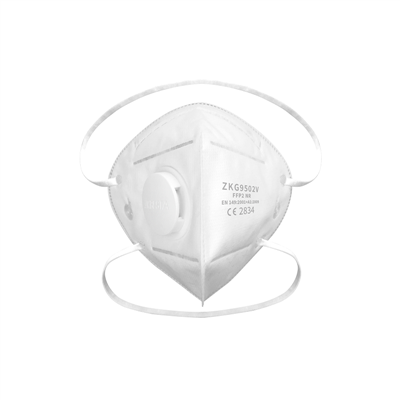
Recommended Product: CE FFP2 Mask (Foldable, headband style for secure fit).
2)Scenario B: Heavy Industry, Chemical & Pharma (FFP3)
When working with toxic substances, hard woods, or biological hazards where the OEL is exceeded by up to 50 times, FFP3 is the regulatory requirement.
Applications: Welding fumes (manganese/chromium), pharmaceutical powder handling, asbestos removal (licensed), hospital isolation wards.
Target Hazards: Metal fumes, oil mists, asbestos fibers, bacteria, viruses.
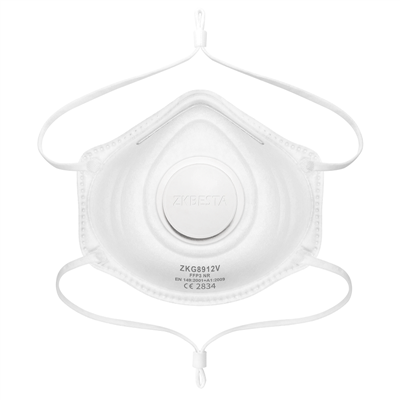
Recommended Product: Face Mask FPP3 (High filtration, exhalation valve to reduce heat stress).
3. Compliance Verification: Avoiding "Fake CE" Risks
As a sourcing professional, verifying the authenticity of the CE mark is your primary due diligence step. The market is flooded with "CE-style" masks that lack valid certification.
The 3-Step Verification Protocol:
Check the Notified Body Number: A valid CE mark for PPE Category III (Complex Design) must be followed by a 4-digit number (e.g., CE 2797). This number corresponds to the Notified Body that performed the initial type examination.
Validate on NANDO: Cross-reference the number on the European Commission's NANDO (New Approach Notified and Designated Organisations) database. Ensure the scope of the Notified Body includes "PPE Regulation (EU) 2016/425" and specifically "Respiratory protective devices."
Request the EU Type Examination Certificate: Ask the China manufacturer for the full certificate (not just a test report). A test report proves one batch passed; a certificate proves the factory quality system is audited.
ZKBESTA Compliance Status:
ZKBESTA products are manufactured under an ISO9001 quality system. Our FFP2 and FFP3 lines carry valid CE certification issued by recognized Notified Bodies, ensuring full traceability and legal compliance for import into the EU and UK markets.
4. Sourcing Strategy: OEM, MOQ, and Supply Chain
For distributors and HSE managers, the commercial terms are as critical as the technical specs.
OEM Capabilities and Customization
Logo Printing: Silk-screen printing on the mask surface or laser etching on the valve.
Packaging: Custom printed boxes (e.g., 20pcs/box, 10 boxes/case).
Tooling: For unique shell designs or specific valve mechanisms, mold customization is available.
MOQ: Standard OEM orders typically start at 2,000 pieces per model.
Production and Logistics
Capacity: High-volume production lines capable of 900,000+ units/day ensure stability during global shortages.
Lead Time: 15-25 days for standard OEM orders after deposit.
Incoterms: FOB Xiamen, CIF, or DDP options available depending on volume.
Total Cost of Ownership (TCO)
While unit price is a factor, consider the breathability (pressure drop). Masks with lower inhalation resistance (e.g., <0.5 mbar) reduce worker fatigue, leading to higher compliance rates and fewer breaks. ZKBESTA utilizes advanced electret melt-blown media to maximize filtration while minimizing airflow resistance.
Conclusion
When procuring respiratory protection, the choice between FFP2 and FFP3 is a calculation of risk versus cost. For high-hazard environments, the FFP3 specification (≥99% efficiency) is non-negotiable. Ensure your supplier provides valid EN149:2001+A1:2009 certification and consistent TIL data.
FAQ
Q: How do I verify if your CE certificate for FFP3 masks is authentic?
A: We provide the full EU Type Examination Certificate issued by a Notified Body (e.g., SGS, TUV, or APPLUS). You can verify the Notified Body's 4-digit ID number on the official EU NANDO database to confirm their authorization for PPE Regulation (EU) 2016/425.
Q: What is the MOQ and lead time for OEM FFP2/FFP3 masks with a custom logo?
A: The standard MOQ for silk-screen logo printing is 2,000 pieces per model. For custom packaging, the MOQ is typically 10,000 pieces. Lead time is approximately 15 days for sample approval and 25 days for bulk production after deposit.
Q: Can your FFP3 masks be used for welding fumes and oil mists?
A: Yes. Our FFP3 masks are rated "NR" (Not Reusable) but are tested against both NaCl (solid) and Paraffin Oil (liquid) aerosols per EN149 standards. They provide ≥99% filtration efficiency against oil and non-oil based particulates, making them suitable for welding fumes, metalworking mists, and asbestos removal.