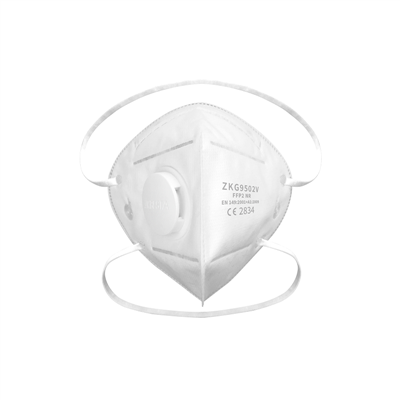
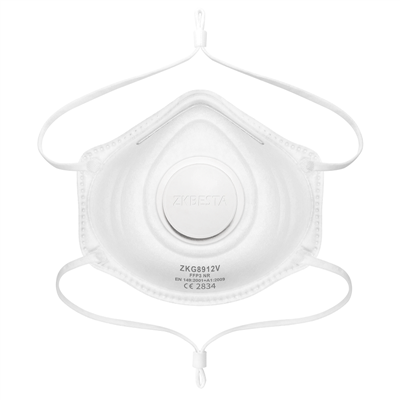
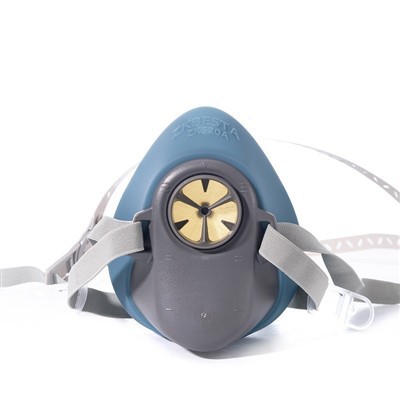
For procurement of respiratory protection in the EU, compliance with EN143:2021 is non-negotiable for particle filters intended for use with reusable half and full-face masks. This standard defines the minimum requirements for filtration efficiency, breathing resistance, and mechanical strength. For a purchasing manager, the critical parameters are the filtration class (P1, P2, P3), the Total Inward Leakage (TIL), and the validity of the CE certificate issued by an EU Notified Body.
Ⅰ. Decoding EN143:2021 and Filtration Classes
The EN143 standard specifies requirements, testing, and marking for particle filters. A key distinction for buyers is between filters for disposable masks (governed by EN149) and these filters for reusable systems. The 2021 revision introduced stricter testing protocols, particularly for mechanical strength and clogging resistance.
The standard defines three classes of filters based on their filtration efficiency against sodium chloride (NaCl) and paraffin oil aerosols.
|
Parameter |
Test Standard |
ZKBESTA Value (P3) |
EN143:2021 Minimum (P3) |
|
Filtration Efficiency (NaCl) |
EN143:2021 |
99.98% |
≥ 99.97% |
|
Filtration Efficiency (Oil) |
EN143:2021 |
99.98% |
≥ 99.97% |
|
Inhalation Resistance |
EN143:2021 |
< 80 Pa @ 95 L/min |
≤ 240 Pa @ 95 L/min |
|
Exhalation Resistance |
EN143:2021 |
< 60 Pa @ 160 L/min |
≤ 300 Pa @ 160 L/min |
P1 Filters: These are the least efficient, capturing at least 80% of airborne particles. They are suitable for environments with low concentrations of non-toxic solid particulates, such as pollen or coarse dust from construction work.
P2 Filters: Offering a higher level of protection, P2 filters must achieve at least 94% filtration efficiency. They are the most common choice for general industrial applications, including welding fumes, sanding, and handling of certain pharmaceuticals.
P3 Filters: This class provides the highest level of protection, with a minimum efficiency of 99.97%. P3 filters are mandatory for environments containing toxic particles, such as asbestos, heavy metal fumes, or radioactive particulates. ZKBESTA's respirator particulate filter product line includes P3 options that consistently exceed this threshold.
Ⅱ. Sourcing Strategy: Beyond the Certificate Number
Verifying a CE certificate is the first step, but a robust sourcing strategy requires deeper technical and logistical due diligence.
1)Certificate Authentication: Always cross-reference the 4-digit Notified Body number on the certificate and product packaging with the official EU NANDO database. This confirms the certificate's authenticity and scope. A certificate for EN140 (mask body) does not cover EN143 (filter).
2)Total Inward Leakage (TIL): Filtration efficiency is a material property tested in a lab. TIL is a more practical measure of real-world performance, accounting for leakage around the face seal. EN143 requires P3 filters to have a maximum TIL of 2%. During factory audits, we conduct panel fit tests to ensure our filter and mask combinations meet this requirement across a range of facial structures.
3)Material Composition: The filter medium is critical. ZKBESTA utilizes a composite of melt-blown fabric and electrostatic cotton. This combination provides high filtration efficiency with low breathing resistance, reducing user fatigue during long shifts. For applications involving nuisance levels of organic vapors, an activated carbon layer is integrated.
4)Supply Chain Stability: For distributors, consistent supply is as important as product quality.
5)MOQ: Standard MOQ for private label orders is 500 pieces per model.
6)Lead Time: 15-25 days for production after deposit confirmation.
7)Production Capacity: 19 fully automatic production lines ensure stable output and on-time delivery.
Ⅲ. EU Customs Clearance and Market Surveillance
The EU's Market Surveillance Regulation (EU) 2019/1020 has significantly increased checks at borders and within the member states. Non-compliant PPE is detained and destroyed at the importer's expense.
Technical Documentation File (TDF): As the importer of record, you are legally required to hold a complete TDF for each product. This must include:
The EU Declaration of Conformity (DoC).
The full test report from the Notified Body.
User instructions in the language of the destination country.
Details of the manufacturing process and quality control procedures.
ZKBESTA provides a complete TDF for all CE-certified products, ensuring smooth customs clearance.
Product Marking: Each filter must be durably marked with:
The manufacturer's name or trademark.
The standard number and filtration class (e.g., "EN 143:2021 P3 R").
The "R" (Reusable) or "NR" (Non-Reusable) designation.
The CE mark followed by the Notified Body number.
Ⅳ. ZKBESTA's Compliance-First Manufacturing Process
Our production process is designed to ensure every batch meets the standards of the initial type examination.
- Raw Material Inspection: All incoming melt-blown fabric and electrostatic cotton are tested for basis weight, filtration efficiency, and breathing resistance before being released to production.
- In-Process Control: Automated vision systems check for defects in filter pleating and sealing during assembly.
- Final Batch Testing: Every production batch undergoes a final inspection, including a visual check, dimensional verification, and a spot-check of filtration efficiency using a laser particle counter.
- Traceability: Each box is labeled with a batch number, allowing full traceability back to the raw material lot and production date.This rigorous process, governed by our ISO9001:2015 certified quality management system, minimizes the risk of non-conformity and protects our partners from liability.
FAQ
Q: What is the difference between EN143 and EN149 filters?
A: EN143 covers particle filters for use with reusable half and full-face masks (e.g., ZKBESTA's 7000 series). EN149 covers filtering half masks (disposable respirators like FFP2). They are not interchangeable.
Q: What is your standard MOQ and lead time for OEM orders?
A: Our standard MOQ for private labeling (silk-screen printing) is 500 pieces per model. The typical lead time is 15-25 days after order confirmation. We can provide samples for testing within 7 days.
Q: Can you provide the Technical Documentation File for customs clearance?
A: Yes. For every CE-certified product, we supply a complete Technical Documentation File, including the EU Declaration of Conformity, test reports, and user instructions, to ensure smooth EU customs clearance.

Ready to Source Compliant Respiratory Protection?
Ensure your supply chain is secure with certified, high-performance particulate filters.