Emergency PPE Stockpile Management: Shelf Life, Rotation & Storage Best Practices
Effective PPE stockpile management is not about maximizing inventory volume; it is about ensuring operational readiness and regulatory compliance when an emergency occurs. For HSE managers and procurement directors, the critical metric is the "ready rate" of safety equipment. A stockpile of expired respirators or degraded safety helmets represents a significant liability and a failure of duty of care.
This guide details the technical parameters for maximizing the service life of respiratory and head protection equipment, defining storage protocols based on material science, and implementing a rotation strategy that minimizes waste while maintaining safety standards.
1. Technical Shelf Life & Material Degradation Factors
Shelf life is defined as the period during which the PPE maintains its certified performance levels (e.g., filtration efficiency, impact absorption) when stored under recommended conditions. Degradation is primarily driven by the chemical stability of polymers and the physical properties of filtration media.
Respiratory Protection (Elastomers & Filtration)
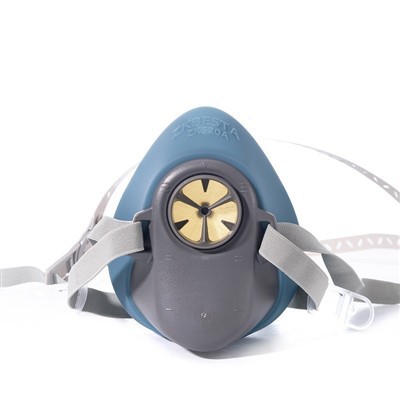
Silicone & TPE Facepieces: High-grade silicone (used in ZKBESTA reusable masks) offers superior resistance to oxidation and UV radiation compared to natural rubber. Under proper storage, silicone maintains its elasticity and sealing properties for 5 years or more.
Thermoplastic Elastomers (TPE): Commonly used in disposable mask straps and valves. These materials can suffer from "creep" or hardening if stored under tension or extreme temperatures.
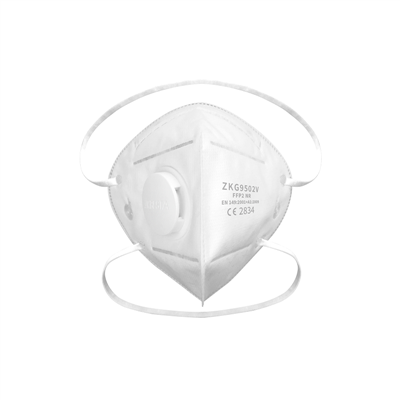
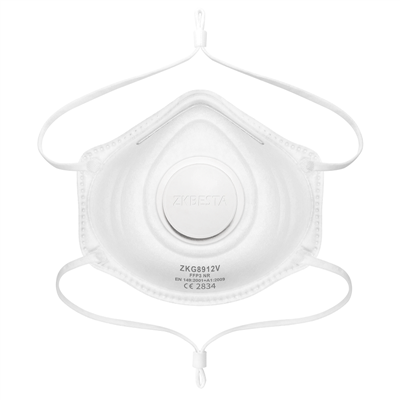
Melt-blown Filtration Media: The electrostatic charge in FFP2/FFP3 filters (crucial for capturing sub-micron particles) can dissipate over time, especially in high-humidity environments. While the physical barrier remains, the electrostatic attraction-which captures particles efficiently without increasing breathing resistance-degrades.
Activated Carbon: Used in organic vapor cartridges. The adsorption capacity is stable if the cartridge remains hermetically sealed. Once the seal is broken, the carbon begins adsorbing ambient VOCs, reducing its service life for the intended hazard.
Head Protection (Shell & Suspension)
HDPE (High-Density Polyethylene): Resistant to moisture absorption but susceptible to UV degradation. Indoor storage is mandatory.
ABS (Acrylonitrile Butadiene Styrene): Offers high impact resistance but can become brittle if exposed to extreme cold or specific solvents during storage.
Suspension Systems: Nylon or textile straps lose tensile strength over time due to hydrolysis (moisture absorption).
2. Comparative Shelf Life Data
The following table outlines the expected shelf life for standard PPE categories based on material composition and EN/ANSI standards.
|
PPE Category |
Primary Material |
Expected Shelf Life (Sealed) |
Primary Degradation Factor |
|
FFP2/FFP3 Disposable Mask |
PP + Melt-blown + TPE |
3 - 5 Years |
Electrostatic charge dissipation; Strap elasticity loss. |
|
Reusable Half/Full Face Mask |
Liquid Silicone / TPE |
5+ Years |
Oxidation of elastomers; Valve membrane hardening. |
|
Gas/Vapor Cartridge |
Activated Carbon / Catalyst |
5 Years (Sealed) |
Pre-adsorption of atmospheric contaminants once opened. |
|
Safety Helmet (HDPE/ABS) |
Thermoplastic Polymer |
3 - 5 Years |
UV exposure; Thermal cycling causing micro-cracks. |
|
Safety Glasses (PC Lens) |
Polycarbonate |
3 Years |
Coating delamination; Frame plasticizer migration. |
Engineering Note: The "Shelf Life" clock starts from the date of manufacture, not the date of purchase. Always verify the manufacturing date code on the packaging or molded into the product.
3. Environmental Storage Protocols
Improper storage accelerates degradation. To maintain the integrity of a CE certified stockpile, the storage environment must be controlled.
Temperature and Humidity Control
- Optimal Range: Store PPE in a dry environment between 10°C and 25°C.
- Humidity: Relative humidity should be maintained below 80%. High humidity promotes mold growth on textile straps and degrades the electrostatic charge in particulate filters.
- Thermal Cycling: Avoid areas with frequent temperature fluctuations (e.g., unheated warehouses in winter), as condensation can form inside packaging.
- Light and Radiation
- UV Exposure: Ultraviolet light breaks down polymer chains in HDPE helmets and TPE components. Stockpiles must be kept in opaque packaging or dark rooms.
- Ionizing Radiation: Keep PPE away from X-ray sources or radioactive materials, which can alter material crystallinity.
- Chemical Segregation
- Contamination Risk: Never store respiratory protection (especially filters and masks) in the same area as solvents, acids, or cleaning agents. Volatile Organic Compounds (VOCs) can permeate packaging and saturate activated carbon filters or degrade elastomers.
- Palletizing: Store boxes on pallets, at least 20cm off the floor and 50cm away from walls, to ensure air circulation and prevent moisture wicking.
4. Stock Rotation Strategies: FIFO vs. FEFO
To prevent obsolescence, a rigorous rotation policy is required.
First-In, First-Out (FIFO) The standard logistics approach. The oldest stock (by manufacturing date) is issued first. This is effective for high-turnover items like disposable masks.
First-Expired, First-Out (FEFO) Critical for specialized PPE with varying batch lifespans. If a batch of organic vapor cartridges has a shorter shelf life due to a specific catalyst formulation, it must be prioritized over newer stock with a longer validity.
Implementation Checklist:
Labeling: Clearly mark every pallet/box with the "Date of Manufacture" and "Expiration Date" in large font.
Segregation: Physically separate "Quarantine/Expired" stock from "Active" inventory.
Auditing: Conduct quarterly physical audits to verify system accuracy.
5. Digital Management & Compliance Tracking
For large-scale operations, manual tracking is insufficient. Modern inventory management systems (IMS) or Enterprise Resource Planning (ERP) modules should be utilized.
Batch Tracking: Assign unique batch IDs to incoming shipments. This allows for targeted recalls if a specific manufacturing batch fails a quality control test.
Automated Alerts: Configure the system to trigger alerts 6 months and 1 month before stock expiration.
Usage Analytics: Analyze consumption rates to adjust procurement cycles. Overstocking leads to expiration waste; understocking risks safety.
6. End-of-Life & Disposal
When PPE reaches its expiration date, it must be removed from service immediately.
Destruction: Expired safety helmets and respirators should be physically destroyed (crushed/cut) to prevent accidental or unauthorized use.
Recycling:
HDPE/ABS Helmets: Often recyclable as industrial plastic waste.
Silicone Masks: Requires specialized recycling facilities.
Filter Media: Used filters containing hazardous particulates must be disposed of as hazardous waste according to local environmental regulations. Unused, expired particulate filters can often be disposed of as general waste, but check local laws.
Conclusion
Managing an emergency PPE stockpile requires a shift from "buying products" to "managing asset integrity." By adhering to strict environmental controls and rotation protocols, organizations ensure that every piece of equipment-from a simple FFP2 mask to a complex full-face respirator-performs as certified when lives depend on it.
For organizations looking to optimize their supply chain with high-stability, long-shelf-life PPE, ZKBESTA provides manufacturing data sheets and batch-specific expiration tracking to support your inventory management systems.
[Request bulk pricing & OEM spec sheet] to discuss how we can support your long-term stockpile strategy.
FAQ
Q: What is the standard shelf life for FFP2 and FFP3 disposable respirators?
A: Typically 3 to 5 years from the date of manufacture, provided they are stored in original packaging at 10°C-25°C with <80% humidity. The primary failure mode is the dissipation of the electrostatic charge in the melt-blown filter media.
Q: Can I use a gas cartridge that was opened 6 months ago but rarely used?
A: No. Once the hermetic seal of an organic vapor cartridge is broken, the activated carbon begins adsorbing ambient humidity and VOCs. It should be discarded at the end of the shift or sealed in a vapor-tight bag for short-term reuse (max 1 week), but never stored for months.
Q: How should safety helmets be stored to prevent HDPE degradation?
A: Helmets must be stored in a cool, dry, and dark environment. Avoid direct sunlight (UV) and temperatures exceeding 50°C (e.g., rear windows of vehicles), as heat accelerates the oxidation of the polymer shell, leading to brittleness and impact failure.