EU PPE Regulation 2016/425: What Importers Need to Know in 2026
For any entity placing Personal Protective Equipment (PPE) on the European market, Regulation (EU) 2016/425 is the governing legal framework. As we move through 2026, the obligations for importers and distributors are strictly enforced, moving beyond simple CE marking to comprehensive technical documentation and supply chain due diligence.
For procurement managers and business owners sourcing from a China manufacturer, understanding these requirements is not optional-it is a prerequisite for market access. This guide details the specific compliance obligations under Regulation (EU) 2016/425, focusing on Category III PPE (complex risks), and outlines how to validate a supplier's conformity.
The Shift to Category III: Why It Matters for Respiratory Protection
Under Regulation (EU) 2016/425, PPE is divided into three categories based on the level of risk. Most industrial respiratory protection (e.g., FFP2/FFP3 masks, gas masks) and safety helmets fall under Category III, covering risks that can cause very serious consequences such as death or irreversible damage to health.
Unlike Category I (simple risks), Category III devices require:
EU Type Examination (Module B): A Notified Body must examine the technical design and verify that the sample meets essential health and safety requirements (EHSRs).
Conformity to Type based on Internal Production Control plus Supervised Product Checks (Module C2) OR Quality Assurance of the Production Process (Module D).
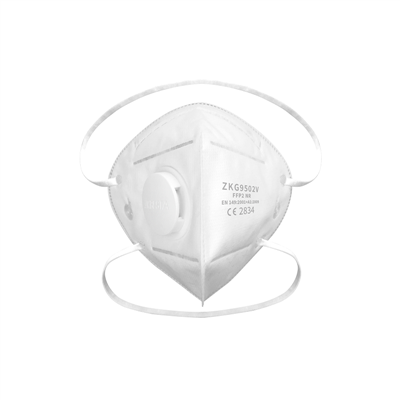
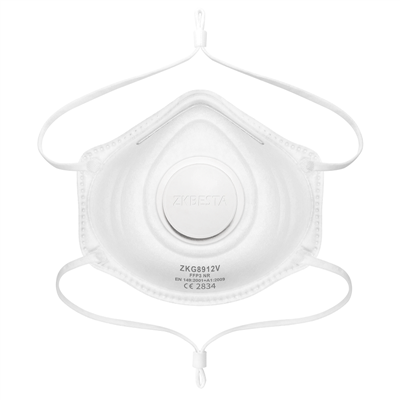
Key Takeaway: A CE mark alone is insufficient. For Category III PPE, the CE mark must be followed by the 4-digit identification number of the Notified Body (e.g., CE 2834).
Importer Obligations: The "Due Diligence" Checklist
Regulation (EU) 2016/425 explicitly defines the "Importer" as any natural or legal person established within the Union who places PPE from a third country on the Union market.
Before placing a product on the market, importers must ensure the following:
1. Verification of the EU Declaration of Conformity (DoC)
The manufacturer (e.g., ZKBESTA) must issue a DoC stating the product complies with the relevant harmonized standards (e.g., EN 149:2001+A1:2009 for filtering half masks).
Action: Verify that the DoC references the correct Regulation (EU) 2016/425 and the specific standards.
Action: Ensure the DoC is signed and includes the manufacturer's details.
2. Technical Documentation Availability
The manufacturer must draw up technical documentation. The importer must ensure this documentation can be made available to market surveillance authorities for 10 years after the PPE has been placed on the market.
Critical Data Points: This includes design drawings, risk assessments, test reports (e.g., filtration efficiency, breathing resistance), and the quality assurance file.
3. Labeling and Traceability
The PPE must bear the CE marking and the Notified Body number. Furthermore, the product must indicate:
Name, registered trade name, and address of the manufacturer.
Type, batch, or serial number.
Instructions and information in the official language(s) of the Member State where the product is sold.
Technical File Deep Dive: Validating the "CE Certified" Claim
When sourcing from an OEM supplier in China, the most common point of failure is the validity of the technical file. Market surveillance authorities in the EU frequently request these files to verify compliance.
Here is a breakdown of the essential components a valid technical file must contain for respiratory protection:
|
Document Component |
Description & Requirement |
Verification Check |
|
EU Type-Examination Certificate |
Issued by a Notified Body (e.g., SGS, TUV, BSI). Valid for 5 years. |
Check certificate number on the NANDO database. Ensure it covers the specific model. |
|
Test Reports |
Must cover EN 149 (masks), EN 140 (half masks), or EN 136 (full face masks). |
Verify parameters: Filtration Efficiency (≥94% for FFP2, ≥99% for FFP3), Total Inward Leakage, and Breathing Resistance. |
|
Quality Assurance |
Proof of ISO 9001:2015 or specific PPE module (Module C2/D) certification. |
Ensure the scope of the ISO certificate covers "production of respiratory protective equipment." |
|
Risk Assessment |
Analysis of hazards (e.g., particulate, gas) and protective measures. |
Must align with Annex II of Regulation (EU) 2016/425. |
|
User Instructions |
Must be in the language of the destination country. |
Check for clear warnings, storage instructions, and limitations of use. |
ZKBESTA Compliance Support: Aligning with Regulation (EU) 2016/425
As a specialized manufacturer of respiratory and head protection, ZKBESTA structures its production and documentation to support importers in meeting these regulatory burdens. We understand that a CE certified product is only as good as the paperwork backing it.
1. Validated Certification
Our disposable masks, including the [CE certified FFP3 respirator specifications], are tested according to EN 149:2001+A1:2009. We hold valid EU Type-Examination certificates issued by recognized Notified Bodies.
Standard: EN 149:2001+A1:2009
Filtration: FFP3 NR D (≥99% efficiency)
Notified Body: Identified by the 4-digit code on the product.
2. Traceability and Labeling
We ensure every unit leaving the factory meets labeling requirements. This includes the CE mark, the Notified Body number, and the standard reference. For OEM partners, we integrate your branding while maintaining the mandatory regulatory markings required by Regulation (EU) 2016/425.
3. Technical File Handover
Upon request and verification of distributor status, we provide the necessary excerpts of the technical file required for your due diligence. This includes:
Copies of the EU Type-Examination Certificate.
Test reports from accredited laboratories.
Drafts of the EU Declaration of Conformity for your review.

Supply Chain Stability and Quality Control
Compliance is not a one-time event; it is a continuous process of quality control. Regulation (EU) 2016/425 requires that the manufactured products consistently match the approved type.
ZKBESTA maintains strict control over the supply chain:
Raw Materials: We source high-performance melt-blown fabrics and activated carbon cloths with verified filtration properties.
Production: Our fully automatic lines ensure consistent ultrasonic welding and strap attachment, critical for the "Total Inward Leakage" test.
Inspection: We perform in-house daily checks on filtration efficiency and breathing resistance to ensure batch consistency before third-party audits.
For importers, this reduces the risk of "non-conformity" alerts from customs or market surveillance authorities.
Conclusion: Sourcing with Confidence
Navigating Regulation (EU) 2016/425 requires a partnership between the EU importer and the non-EU manufacturer. The burden of compliance is shared. By choosing a manufacturer that understands the depth of these regulations-beyond just the logo-you mitigate the risk of rejected shipments and legal liability.
Ensure your supplier can provide the full technical documentation, valid Notified Body certificates, and consistent quality control data.
Ready to secure your supply chain with compliant PPE? [Request bulk pricing & OEM spec sheet] to review our current certifications and technical files.
FAQ
Q: How can I verify if a supplier's CE certificate for FFP3 masks is authentic under Regulation (EU) 2016/425?
A: You must check the certificate number on the EU NANDO (New Approach Notified and Designated Organisations) database. A valid certificate will list the manufacturer (e.g., ZKBESTA), the specific model, and the standard (EN 149:2001+A1:2009). Ensure the certificate is issued by a Notified Body authorized for PPE Category III.
Q: What is the difference between Module B and Module C2 in the CE certification process?
A: Module B (EU Type-Examination) is the design phase where a Notified Body certifies that the sample meets requirements. Module C2 is the production phase, involving supervised product checks at random intervals to ensure the mass-produced items match the approved type. Both are required for Category III PPE.
Q: Can you provide the Technical File for customs clearance?
A: As the manufacturer, we maintain the master Technical File. For importers, we provide the EU Declaration of Conformity, the EU Type-Examination Certificate, and relevant Test Reports necessary for customs clearance and market surveillance verification within the EU.