Face Shield + Respirator Compatibility: Avoiding Fogging & Fit Issues in Hot Work
Bottom Line Up Front (BLUF): Combining a half-mask respirator with a face shield creates a sealed micro-climate that traps exhaled breath, leading to immediate fogging and compromised visibility. The engineering solution requires managing airflow dynamics: exhaled air from the respirator (typically vented at <30Pa resistance) must be directed away from the face shield's inner surface. For procurement, this means selecting a system where the face shield bracket geometry and respirator exhalation valve placement are mutually compatible, ensuring compliance with both EN166 (optical class) and EN140/EN149 (respiratory protection) standards without visual obstruction.
1. The Physics of Fogging: Why Standard PPE Fails in Combination
When a worker wears a filtering half mask (e.g., FFP2/FFP3) or an elastomeric half mask underneath a face shield, two physical phenomena occur:
Thermal Convection: Exhaled air (approx. 35°C, 100% humidity) rises. If the face shield sits close to the face or the respirator lacks a deflector, this warm air hits the cooler polycarbonate surface, condensing into micro-droplets (fog).
Turbulence: In dynamic environments (welding, grinding), head movement creates turbulence. Without a sealed gasket or proper ventilation, the "chimney effect" draws unfiltered air from the neck area up into the visor, carrying dust and moisture.
The Engineering Fix: To prevent this, the PPE system must separate the "exhalation zone" from the "optical zone."
Respirator Requirement: Low breathing resistance (<30Pa for exhalation per EN149) and a well-sealed nose clip to prevent upward leakage.
Face Shield Requirement: A bracket design that positions the visor at a safe distance from the respirator's exhaust valve, or the integration of anti-fog coatings.
2. Material Science: Selecting the Right Visor for Hot Work
Not all plastics react to heat and impact the same way. For welding and grinding (hot work), the choice of visor material is critical for maintaining optical clarity and structural integrity.


Polycarbonate (PC) vs. Acetate vs. PETG
|
Feature |
Polycarbonate (PC) |
Acetate |
PETG |
|
Impact Resistance |
High (Best for grinding/flying debris) |
Medium |
Medium-High |
|
Heat Resistance |
High (Resists warping from welding spatter) |
Low (Softens at lower temps) |
Medium |
|
Optical Clarity |
Good (Requires coating for scratch resistance) |
Excellent (Inherent clarity) |
Good |
|
Chemical Resistance |
Low (Attacked by solvents) |
High (Best for chemical splash) |
Medium |
|
ZKBESTA Application |
Welding, Metal Fabrication, Construction |
Chemical Handling, Labs |
General Industry, Food Processing |
Recommendation: For welding and heavy grinding, Polycarbonate is the mandatory choice due to its high impact and heat resistance. Look for visors treated with anti-fog and anti-scratch coatings to extend service life.
3. Compatibility Matrix: Respirator & Face Shield Integration
A common procurement error is buying "universal" face shields that do not fit specific respirator profiles. The following matrix outlines compatibility considerations for ZKBESTA product lines.
System Integration Guide
|
Respirator Type |
Face Shield Bracket Type |
Compatibility Notes |
Risk Factor |
|
Filtering Half Mask (FFP2/FFP3) |
Standard Headband Mount |
High. The mask sits low; the shield hangs freely. Ensure the mask has a nose foam strip to stop upward air leakage. |
Fogging if mask fit is loose at the nose bridge. |
|
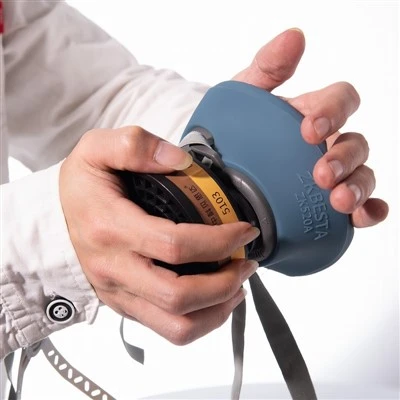
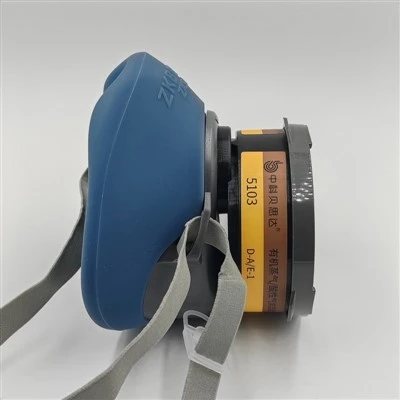
Elastomeric Half Mask (Silicone) |
Hard Hat Attachment (Alu/PC) |
Medium. The mask body is bulky. Ensure the shield bracket has enough "stand-off" distance to clear the mask's exhalation valve. |
Dislodgement. Heavy masks can pull the shield down if the bracket is flimsy. |
|
Welding Helmet (Auto-darkening) |
Integrated Grind Mode |
High. Use the "grind mode" which locks the outer shell up, utilizing the inner polycarbonate lens. |
Scratching. Ensure the protective lens is replaceable. |
Technical Note on ZKBESTA 92701 Mix Series: Our 92701 Mix aluminum frame face shields are designed with an adjustable ratchet suspension. This allows the user to increase the distance between the face and the visor, creating a ventilation channel that significantly reduces fogging when worn over a CE certified FFP3 respirator.
4. Anti-Fog Technologies: Passive vs. Active
When specifying PPE for high-humidity environments or heavy exertion, consider the anti-fog mechanism.
Passive Coatings (Chemical):
Hard-Coat PC: A permanent layer applied during extrusion. It resists scratching but may lose anti-fog properties over time if abraded.
Dual-Action Coating: Combines anti-scratch and anti-fog. Recommended for multi-shift operations.
Active Ventilation (Physical):
Top Vents: Small openings at the forehead (protected from direct splash) to let heat escape.
Chin Guards: Foam or plastic barriers at the bottom to stop recirculation of air from the respirator.
ZKBESTA Standard: Our Impact Resistant Face Shields typically utilize high-grade Polycarbonate with surface treatments optimized for thermal stability, ensuring the coating does not craze under the heat of welding spatter.
5. Operational Protocol: Donning for Maximum Protection
Even the best equipment fails if worn incorrectly. HSE managers should enforce the following "Layering Protocol" for workers:
Fit Test the Respirator First:
Perform a negative/positive pressure fit check.
Rule: If the respirator leaks air at the nose, the face shield will fog. Fix the mask fit before adding the shield.
Position the Face Shield:
Adjust the headgear so the bottom of the visor sits below the chin of the respirator (or over the chin guard if equipped).
Ensure the forehead band is tight enough to prevent the shield from bouncing during movement.
The "Seal" Check:
Check for gaps at the temples. Large gaps allow dust to enter from the sides.
6. Procurement Specifications for Bulk Orders
When sourcing wholesale face shields and respirators, ensure the technical data sheet (TDS) includes the following verifiable data points:
- Optical Class: Must be Class 1 (Distortion < 0.06 diopters) per EN166 for precision work.
- Mechanical Strength: Marked with 'F' (45m/s impact) or 'B' (120m/s impact).
- Respirator Certification: EN149:2001+A1:2009 (FFP2/FFP3) or EN140 (Half Mask).
- Material Safety: Non-allergenic materials (latex-free) for the head harness and face seal.
ZKBESTA Manufacturing Capabilities
|
Parameter |
Specification |
|
MOQ (Stock) |
50 pcs (Mixed models acceptable) |
|
MOQ (OEM) |
500 pcs (Logo printing/Mold customization) |
|
Lead Time |
15-25 Days (FOB Xiamen) |
|
Certifications |
ISO9001, CE (EN166, EN149, EN140) |
|
Customization |
Frame color, Logo printing, Headgear design |
FAQ
Q: Can your polycarbonate face shields withstand the heat from MIG/MAG welding spatter?
A: Yes. Our welding face shields are made from high-impact Polycarbonate (PC) which has a high heat deflection temperature. They are rated for "T" (Molten metals and hot solids) protection under EN166 standards, making them suitable for welding environments.
Q: Do your half-mask respirators fit under the 92701 Mix face shield without breaking the seal?
A: Yes. The 92701 Mix suspension system is adjustable. However, we recommend using our silicone half masks (e.g., ZK8500 series) which have a low-profile design. Always perform a fit test with the specific combination of mask and shield to ensure the headgear straps do not interfere with the respirator straps.
Q: What is the shelf life of the anti-fog coating on your visors?
A: The anti-fog coating is chemically bonded to the substrate. If stored in a cool, dry place away from direct UV light, the shelf life is 3-5 years. Once in use, the coating's longevity depends on cleaning methods; use only mild soap and water-never solvents or abrasive cloths.
Ready to specify the right PPE combo? Download our technical datasheet for the 92701 Mix Series or request a sample kit to test compatibility with your current respirators.