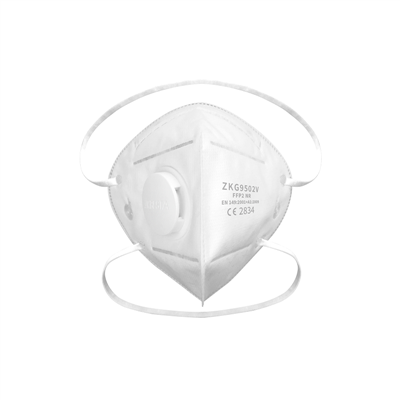
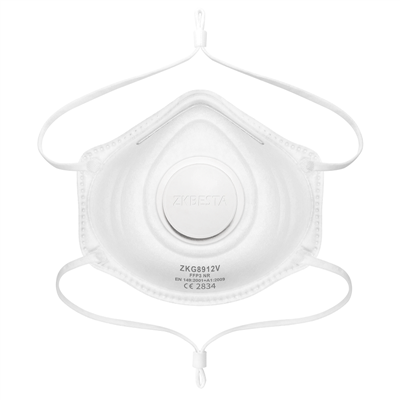
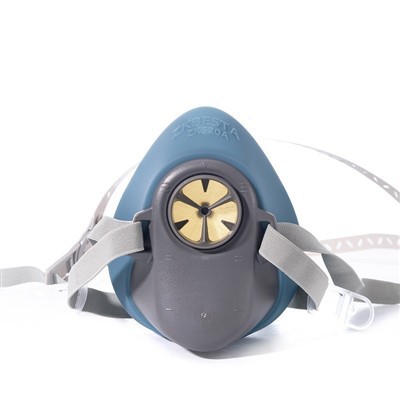
For welding applications involving oil-based fumes and acidic gases, a standard N95 mask is often insufficient. The ZKBESTA ZK8247V model meets the KP95 standard (GB2626-2019), certifying it filters at least 95% of both oil and non-oil-based particles. Its cup shape provides a durable structure that resists collapse in high-heat environments, while an integrated activated carbon layer specifically targets nuisance levels of acid gases like sulfur dioxide and hydrofluoric acid common in welding plumes.
The Engineering Advantage of the Cup Shape in High-Heat Environments

The cup shape is not merely a design preference; it is a structural necessity for welding environments. Unlike foldable masks, the rigid cup structure maintains a consistent air volume, preventing the filter material from collapsing onto the wearer's mouth during heavy exhalation or when leaning forward over a workpiece.
Structural Integrity: The multi-layer construction includes needle-punched flame retardant cotton on the outer and inner layers. This material choice is critical for welding, providing resistance to high-temperature sparks and spatter that would melt standard polypropylene.
Internal Volume: The deep cup design creates a larger internal breathing space. This reduces the "suffocating" sensation often reported with flat-fold masks and minimizes fabric contact with the lips, which is a hygiene and comfort priority during long shifts.
Exhalation Management: The model features a dedicated exhalation valve. In welding, heat stress is a significant factor. The valve reduces heat and moisture buildup inside the mask, lowering breathing resistance and preventing the filter media from becoming saturated with humidity, which can degrade electrostatic filtration efficiency.
Filtration Mechanics: Addressing Oil Fumes and Acid Gases
Welding generates a complex aerosol of particulate matter and gaseous byproducts. Standard N95 (or KN95) filters are tested only against sodium chloride (NaCl) aerosols, representing non-oil particles. However, welding on oily metals or using certain fluxes generates oil mists.
Ⅰ:The KP95 Distinction
The KP95 rating indicates the filter has been tested and certified against both NaCl (non-oil) and Dioctyl Phthalate (DOP) or Paraffin Oil aerosols.
|
Parameter |
Test Standard |
ZKBESTA ZK8247V Performance |
Requirement (KP95) |
|
Filtration Efficiency (NaCl) |
GB2626-2019 |
≥ 99% |
≥ 95% |
|
Filtration Efficiency (DOP Oil) |
GB2626-2019 |
≥ 99% |
≥ 95% |
|
Breathing Resistance (Inhalation) |
GB2626-2019 |
< 160 Pa |
≤ 210 Pa |
|
Breathing Resistance (Exhalation) |
GB2626-2019 |
< 160 Pa |
≤ 210 Pa |
Ⅱ:Activated Carbon Layer for Acid Gas Reduction
Beyond particulate filtration, the ZK8247V incorporates a specialized acid carbon fabric layer. This is distinct from simple "odor reduction" layers found in consumer masks. It is engineered to adsorb specific acidic gases often present in welding fumes, such as:
Sulfur Dioxide ($SO_2$)
Hydrogen Fluoride ($HF$)
Chlorine ($Cl_2$)
This capability makes the mask suitable not just for general construction dust, but for specialized environments like chemical plant maintenance, pickling lines, and heavy industrial welding.

Compliance and Certification: Navigating GB2626-2019

The mask is clearly marked with:
Manufacturer Identification: ZKBESTA
Model Number: ZK8247V
Standard & Classification: GB 2626-2019 KP95
This marking ensures traceability. Unlike generic "N95 style" masks that may only claim filtration efficiency without the structural integrity testing required by the GB standard, the ZK8247V undergoes rigorous head-form testing to ensure the seal holds during movement.
Supply Chain Specifications for Distributors
For distributors and HSE managers planning bulk procurement, the logistical specifications are as follows:
MOQ: 500 pieces (Standard for OEM/Logo printing).
Production Capacity: 900,000 pcs/day (Ensures stability for large-scale projects).
Packaging: 20 pcs/box, 400 pcs/carton.
Shelf Life: 3 years (Stored in a ventilated, dry environment).
Lead Time: 15-25 days after deposit confirmation.
The headband design is preferred for industrial settings over ear loops, as it maintains tension over long periods and allows the mask to be pulled down to the neck during breaks without compromising the elasticity or hygiene of the ear loops.
Conclusion
Selecting the correct respiratory protection for welding requires looking beyond the "N95" marketing term. The ZKBESTA ZK8247V offers a KP95 rating, ensuring protection against the oil-based particulates inherent in welding processes, combined with a flame-retardant cup structure and acid gas adsorption.
For technical datasheets, CE certification copies, or to discuss OEM requirements for your specific region:
Request bulk pricing & OEM spec sheet
FAQ
Q: What is the difference between N95 and KP95 for welding applications?
A: N95 filters only non-oil particles. Welding often produces oil mists. KP95 (GB2626-2019) certifies filtration of both oil and non-oil particles (≥95%), making it the safer choice for metal fabrication and welding.
Q: Does the activated carbon layer protect against welding fumes?
A: The carbon layer in the ZK8247V is designed to reduce nuisance levels of acid gases (like sulfur dioxide) and organic vapors. It is not a substitute for a supplied air respirator in confined spaces with high concentrations of toxic gases, but it provides essential relief for general welding odors.
Q: What is the MOQ for customizing these masks with a company logo?
A: The standard MOQ for silk-screen printing a logo on the ZK8247V cup mask is 500 pieces. For custom mold development or packaging changes, the MOQ is typically 2,000 pieces. Lead time is approximately 15-25 days.