Nanofiber Filter Media: The Next Generation of Respiratory Protection?
Engineering Summary: High-voltage electrostatic spinning nanofiber media represents a shift from traditional melt-blown technologies. By reducing fiber diameter to the nanometer scale, this material achieves a filtration efficiency of ≥99.97% (comparable to FFP3/P3 standards) while maintaining low breathing resistance. For procurement and HSE managers, this translates to longer service life and reduced worker fatigue in high-particulate environments.
Ⅰ:The Physics of Electrostatic Spinning
Traditional melt-blown filters rely on mechanical interception and inertial impaction. However, as filtration efficiency requirements increase (e.g., moving from FFP2 to FFP3), the density of the fiber mat must increase, inevitably raising breathing resistance.
High-voltage electrostatic spinning addresses this trade-off. This process utilizes a high-voltage electrostatic field to stretch polymer solutions into continuous nanofibers.
Key Physical Characteristics:
- Fiber Diameter: Significantly smaller than conventional fibers, creating a denser network with fewer defects.
- Specific Surface Area: The large surface area enhances the capture rate of PM2.5 and sub-micron particles.
- Pore Structure: High porosity with excellent connectivity ensures airflow remains smooth even as the filter loads with dust.

Ⅱ:Performance Metrics: Nanofiber vs. Traditional Media
The primary advantage of nanofiber technology lies in the Quality Factor (QF), which balances filtration efficiency against pressure drop.
|
Parameter |
Traditional Melt-blown (Standard) |
Nanofiber Composite (ZKBESTA Tech) |
Impact on User |
|
Filtration Efficiency |
~95% (FFP2 Level) |
≥99.97% (FFP3 Level) |
Superior protection against welding fumes and fine dust. |
|
Fiber Structure |
Random, thicker fibers |
Uniform, nano-scale web |
Higher dust holding capacity. |
|
Breathing Resistance |
Increases rapidly as dust loads |
Remains stable over time |
Reduces heat and moisture buildup inside the mask. |
|
Service Life |
Standard |
Extended |
Lower total cost of ownership (TCO) for industrial projects. |
ZKBESTA utilizes a proprietary High Dust Holding Capacity (HDC) formula combined with Water Standing Electrode Melt Spray (WSEMS) technology. This creates a crisscrossed, fluffy three-dimensional mesh that is particularly effective against welding fumes, haze, and cigarette smoke.
Ⅲ:Addressing Mass Production Challenges
A common concern for global distributors regarding nanofiber materials is scalability. Historically, electrostatic spinning was limited to laboratory settings.

ZKBESTA has industrialized this process through automatic production lines.
Consistency: Automated controls ensure uniform fiber diameter across batches.
Capacity: Production capabilities support large-scale OEM orders, ensuring supply chain stability for multinational contracts.
Quality Control: Every batch undergoes testing using a Scanning Electron Microscope (SEM) and Automatic Filter Tester (TSI 8130A) to verify pore size and filtration efficiency before shipment.
Ⅳ:Application Scenarios and Customization
The versatility of nanofiber media allows for customization based on specific industrial hazards.
- High-Particulate Environments (Construction/Mining): The high dust holding capacity makes it ideal for [CE certified FFP3 respirator specifications], reducing the frequency of mask changes in dusty tunnels or demolition sites.
- Chemical & Organic Vapor Protection: By combining nanofiber layers with non-adhesive activated carbon fabric, the filter can simultaneously block particulates and adsorb organic vapors (Benzene, Formaldehyde). Unlike glued carbon cloth, this material maintains high permeability and adsorption rates.
- OEM Customization: Procurement teams can specify:
- Filtration Levels: FFP1, FFP2, FFP3, or KN95/100.
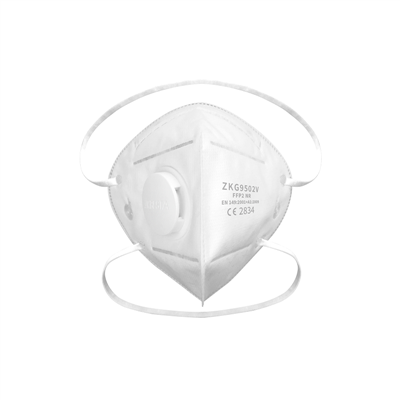
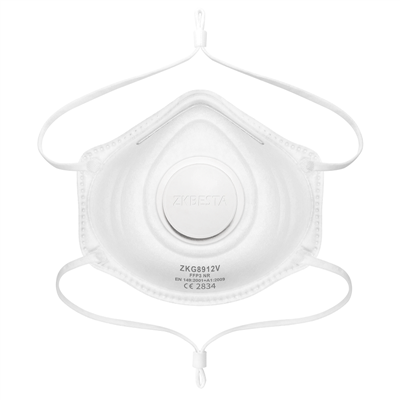
- Shape: Cup shape, foldable, or 3-panel.
- Features: Exhalation valves (resistance <30Pa) to reduce heat stress.
For detailed compatibility with specific headgear or face shields, refer to our [welding fume protection kit for metal fabrication] solutions.
Ⅴ:Supply Chain and Compliance
When sourcing advanced PPE materials from China, verifying compliance is critical.
Standards: Products are tested against EN149:2001+A1:2009 (Europe) and GB2626-2019 (China).
Certifications: Full CE certification (Category III) is available.
MOQ & Lead Time: Standard MOQ is 500pcs for custom branding. Automated lines allow for a lead time of approximately 15-25 days for bulk orders.
FAQ
1.Q: Can the nanofiber filter media be customized for specific particle sizes in pharmaceutical manufacturing?
A: Yes. We offer [OEM services] to adjust the electrostatic spinning parameters, targeting specific particle size ranges (e.g., sub-micron particles) while maintaining breathing resistance below 30Pa.
2.Q: What is the shelf life of the nanofiber filters compared to standard melt-blown?
A: When stored in original packaging at room temperature and low humidity, the shelf life is 3 years. The electrostatic charge stability is verified through aging tests to ensure long-term inventory viability.
3.Q: Do you provide test reports for the nanofiber material for EU CE certification audits?
A: Yes. We provide full TSI 8130A test reports and CE certificates issued by Notified Bodies for all nanofiber-based respirator models.