Epoxy Resin Safety: PPE Requirements for Handling, Mixing & Curing
Bottom Line Up Front (BLUF): Epoxy resin systems present dual hazards: volatile organic compounds (VOCs) during mixing and sensitizing liquid agents during handling. Effective Personal Protective Equipment (PPE) must isolate the respiratory tract from organic vapors and shield the face/eyes from chemical splashes. For procurement, verify that respirators meet EN149:2001+A1:2009 (FFP standards) or EN140 (Half mask) combined with EN14387 (Gas filters), and face shields comply with EN166 for chemical resistance.
1. Hazard Analysis: The Chemistry of Exposure
Epoxy resin safety is not merely about dust protection; it involves complex chemical interactions. The primary risks during the lifecycle of epoxy usage (mixing, application, curing) are:
- Inhalation of Organic Vapors: While modern epoxies have lower VOC content than older solvent-based systems, the amine hardeners and reactive diluents release organic vapors. Prolonged exposure affects the central nervous system and respiratory tract.
- Chemical Splash & Sensitization: Liquid epoxy and hardeners are potent skin sensitizers. A splash to the eyes or face can cause severe chemical burns or permanent sensitization (allergy).
- Particulate Generation: Sanding cured epoxy generates fine dust containing residual unreacted resin, which is hazardous if inhaled.
Risk Matrix & PPE Mapping
|
Process Phase |
Primary Hazard |
Required Protection Mechanism |
|
Mixing/Pouring |
Organic Vapors (Amine blush) |
Gas Filtration (Type A) + Eye Shield |
|
Application |
Chemical Splash |
Chemical Splash Shield + Gloves |
|
Sanding (Cured) |
Particulates (Resin Dust) |
P2 Particulate Filter (FFP2) |
2. Respiratory Protection: Filtration Mechanics & Standards
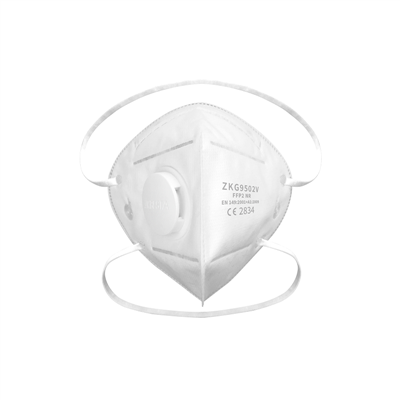
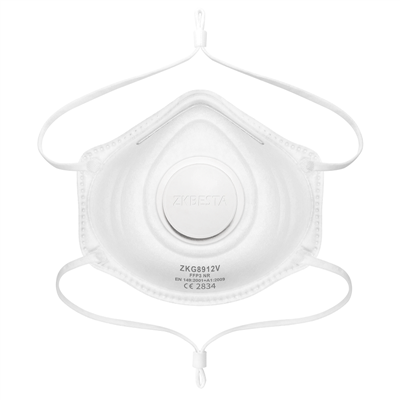
For procurement managers sourcing PPE for epoxy resin environments, distinguishing between particulate filters and gas filters is critical. A standard dust mask (FFP2/FFP3) does not protect against organic vapors.
The Necessity of Organic Vapor Cartridges
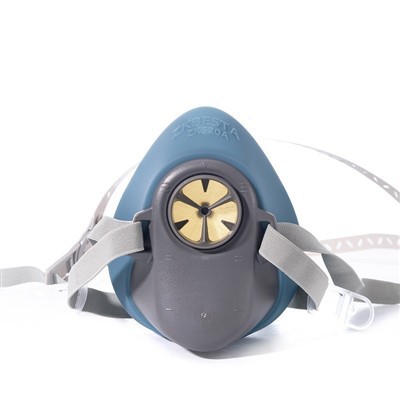
To protect against the volatile components of epoxy, a respirator must utilize an activated carbon layer to adsorb organic vapors.
- Standard: EN14387:2004 (Gas filters and particle filters).
- Classification: Type A (Brown) – Specifically for organic vapors/gases with a boiling point >65°C.
- Capacity: Class 1 (1000 ppm) or Class 2 (5000 ppm). For most industrial epoxy applications, Class 1 is the baseline; Class 2 is required for high-concentration environments.
Full Face vs. Half Face Systems
While half masks are common, full face systems offer superior protection by sealing the eyes and face, preventing vapor irritation (tearing) which often compromises safety compliance.
ZKBESTA Technical Specification: Full Face Organic Vapor Respirator (Model ZK6800)


This system integrates a polycarbonate visor with a bayonet-style filter connection, compatible with A1/B1/E1/K1 cartridges.
|
Parameter |
Test Standard |
ZKBESTA Value (ZK6800) |
EN Minimum Requirement |
|
Assigned Protection Factor (APF) |
EN 529 |
40 (Full Face) |
10 (Half Mask) |
|
Filter Thread |
EN 148-1 |
Rd 40 (Standard) |
Rd 40 |
|
Visor Material |
ASTM D4850 |
Polycarbonate (PC) / TPE |
High Impact Resistance |
|
Field of Vision |
EN 136:1998 |
> 70° Vertical / > 180° Horizontal |
> 60° Vertical |
|
Total Inward Leakage |
EN 136:1998 |
< 0.05% |
< 0.05% (Class 3) |
Procurement Note: When sourcing [Full Face Organic Vapor Respirator] solutions, ensure the mask body is made of medical-grade silicone or TPE (Thermo Plastic Elastomer) to prevent skin irritation during long-duration wear. ZKBESTA units utilize TPE for hypoallergenic sealing.
Filtration Efficiency for Sanding Operations
If the workflow includes sanding cured epoxy, the filtration requirement shifts from gas adsorption to mechanical filtration.
Requirement: FFP3 (EN149:2001+A1:2009) or P3 (EN143).
Efficiency: ≥ 99% filtration of NaCl and Paraffin oil aerosols.
Breathing Resistance: Should be < 30Pa (inhalation) and < 30Pa (exhalation) to reduce worker fatigue.
3. Facial & Ocular Protection: EN166 Compliance
Respirators protect the lungs, but they do not seal perfectly against liquid splashes entering from the top or sides. A dedicated face shield is mandatory for mixing and pouring operations.
Material Science: Polycarbonate (PC) vs. Acetate
For chemical splash protection, the visor material must resist degradation from amine hardeners and solvents.
Polycarbonate (PC): High impact resistance (120 m/s particle impact), good thermal stability, but susceptible to stress cracking by certain strong solvents.
Acetate: Better chemical resistance to specific solvents but lower impact resistance.
Recommendation: For general epoxy resin handling, a Polycarbonate Chemical Splash Face Shield is the industry standard due to its balance of optical clarity and impact resistance.
ZKBESTA Technical Specification: Chemical Splash Face Shield (Model 92701mix)
|
Parameter |
Test Standard |
ZKBESTA Value (92701mix) |
EN Minimum Requirement |
|
Optical Class |
EN 166:2001 |
Class 1 (Continuous use) |
Class 3 (Restricted use) |
|
Mechanical Strength |
EN 166:2001 |
F (45 m/s impact) / B (120 m/s) |
F (Low energy) |
|
Frame Material |
N/A |
Aluminum / Nylon blend |
Heat resistant |
|
Weight |
N/A |
335g |
N/A |
|
Protection Rating |
EN 166 |
Code 3 (Droplets/Splash) |
Code 3 |
The 92701mix model features an aluminum frame construction, providing high-temperature resistance and structural rigidity, essential for environments where heat and chemical exposure coexist.
4. Sourcing Strategy for Distributors & HSE Managers
When building a supply chain for PPE for epoxy resin applications, technical compliance is only half the equation. Supply chain stability and customization capabilities are equally vital.
1. Verification of Certification
Do not accept "CE Mark" claims without documentation.
Action: Request the EU Type Examination Certificate.
Check: Verify the Notified Body 4-digit number (e.g., CE 0123) against the NANDO database.
Standard Check: Ensure the certificate explicitly lists EN149 (for masks) or EN166 (for shields).
2. OEM & Customization Parameters
For distributors looking to private label, ZKBESTA offers specific engineering support:
Logo Printing: Silk screen printing on the mask body or filter housing (MOQ: 500 pcs).
Packaging: Custom blister cards or color boxes (MOQ: 1000 pcs).
Filter Configuration: Customizing the combination of Particulate + Gas filters (e.g., A1P3 D for epoxy dust and vapor).
3. Logistics & Lead Times
Standard Lead Time: 15-25 days for bulk orders (FOB Xiamen).
Sample Policy: Samples available within 1 week for fit-testing and lab verification.
Packaging: Standard export cartons (e.g., 12pcs/ctn for full face masks, 50pcs/ctn for face shields) to optimize container loading.
5. FAQ
1.Q: Can I use a standard P3 dust filter for mixing epoxy resin?
A: No. P3 filters (EN143) only capture particulates (dust/mist). They do not adsorb organic vapors. For mixing epoxy, you must use an A1 or A2 Organic Vapor cartridge (EN14387) or a combination filter (e.g., A1P3).
2.Q: What is the shelf life of the organic vapor cartridges?
A: Typically 5 years from the date of manufacture if the package is unsealed. Once opened, the activated carbon begins to adsorb ambient humidity and contaminants. Cartridges should be replaced based on "end of service life indicators" or a strict schedule (e.g., every 40 hours of use in moderate concentrations).
3.Q: Are the ZKBESTA face shields compatible with safety helmets?
A: Yes. The Chemical Splash Face Shield (92701mix) and similar models are designed with standard slot-mount brackets compatible with industrial safety helmets (EN397), allowing for hands-free operation in overhead work environments.
Ensure your inventory meets the rigorous demands of chemical handling.
Our address
Unit 301, No.10 Building, Yongquan Industry Park, Jimei District, Xiamen, China.
Phone Number
+86 182 5945 0587
Jolypan-zkbesta@foxmail.com