Modular Respirator Systems: Engineering Protection for Multi-Hazard Workplaces
A modular respirator system, combining an EN140:1998 certified half mask with interchangeable EN14387 filter cartridges, is the most cost-effective and logistically sound strategy for protecting workers across diverse hazard zones. This approach eliminates the need for multiple disposable masks, reduces total cost of ownership (TCO), and simplifies inventory management for HSE managers and procurement teams.
For a procurement director, the decision matrix is clear: a reusable silicone facepiece with a 5-year service life, paired with task-specific filters, offers superior long-term value compared to single-use alternatives. The key is ensuring component compatibility and certification integrity across the entire system.
Ⅰ:The Engineering Case for Modularity: TCO and Logistics
The primary driver for adopting a modular system is economic and operational efficiency. A single, high-quality reusable half mask serves as the durable platform, while filters are consumed based on the specific hazard and its concentration.
Total Cost of Ownership (TCO) Breakdown: A disposable FFP3 mask might cost $1.50-$3.00 per unit. A worker using two per day incurs a daily cost of $3.00-$6.00. Over a year (250 working days), this amounts to $750-$1,500 per worker, excluding the cost of storage and disposal.
In contrast, a modular system involves a one-time capital expense for the mask and recurring operational expenses for filters.
Capital Expense (CapEx): One ZKBESTA Silicone Reusable Half Mask (e.g., ZK8500 model).
Operational Expense (OpEx): Filter cartridges replaced based on end-of-service-life indicators or a calculated change-out schedule.
This model shifts spending from a high-frequency, high-volume consumable to a low-frequency, targeted replacement part, offering significant budget predictability.
Ⅱ:Component Compatibility: The Bayonet Standard (EN148-1)
The technical foundation of a successful modular system is a standardized interface. ZKBESTA's reusable half masks utilize the Bayonet (BX) interface, compliant with EN148-1. This is the predominant standard for industrial respirators in Europe and many other global markets.
This standardization ensures that any EN148-1 bayonet-style filter can be securely attached to the mask. For a site safety manager, this means a single mask model can be deployed across the facility, with workers simply swapping filters when moving between different work zones (e.g., from a painting booth to a chemical decanting area).
|
Component |
ZKBESTA Specification |
Governing Standard |
Procurement Note |
|
Half Mask Body |
Liquid Silicone, Bayonet (BX) Interface |
EN140:1998 |
5-year service life, hypoallergenic. Verify CE mark & NB number. |
|
Filter Thread |
Bayonet (BX) Mount |
EN148-1 |
Ensures interchangeability with other EN140 masks. |
|
Filter Types |
A1, B1, E1, K1, P3, and combinations |
EN14387 (Gas), EN143 (P3) |
Select based on specific airborne contaminants. |
Ⅳ:Configuring Your System: A Filter Selection Matrix
Selecting the correct filter is a critical HSE function. Filters are classified by the type of contaminant they are designed to capture. Using the wrong filter provides no protection. The following matrix maps common industrial hazards to the required filter class.
|
Hazard Category |
Specific Contaminants |
Required Filter Class |
Color Code (EN14387) |
Typical Application |
|
Organic Vapors |
Solvents (acetone, xylene), Paints, Fuels |
A1 (or A2 for higher capacity) |
Brown |
Spray painting, Petrochemical handling, Adhesive application |
|
Inorganic Gases |
Chlorine, Hydrogen Cyanide, Hydrogen Sulfide |
B1 (or B2) |
Grey |
Chemical manufacturing, Fumigation, Battery charging |
|
Acid Gases |
Sulfur Dioxide, Hydrogen Chloride, Nitrogen Oxides |
E1 (or E2) |
Yellow |
Electroplating, Pickling operations, Chemical processing |
|
Ammonia & Derivatives |
Ammonia, Methylamine |
K1 (or K2) |
Green |
Refrigeration, Fertilizer production, Chemical synthesis |
|
Particulates |
Dust, Fumes, Mists, Fibers (e.g., asbestos) |
P3 (or P2) |
White |
Welding fumes, Silica dust, Woodworking, Pharmaceutical powders |
|
Combined Hazards |
Vapors AND Particulates (e.g., spray painting) |
A1P3 (or other combinations) |
Brown/White |
Spray painting, Pesticide application, Foundry work |
Critical Note on Filter Capacity: The number in the filter class (e.g., A1 vs A2) indicates its capacity. A Class 1 filter has a lower capacity than a Class 2. Selection must be based on the contaminant concentration and the desired service life of the filter. For precise change-out schedules, an industrial hygienist should be consulted.
ZKBESTA System Specification: ZK8500 Half Mask
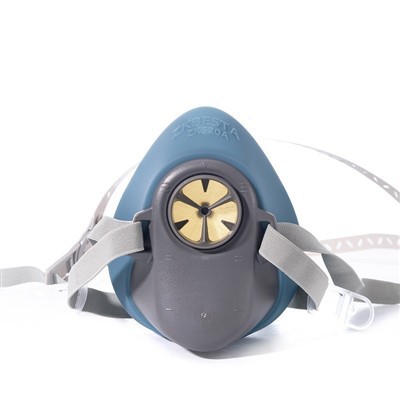
The foundation of the ZKBESTA modular system is the ZK8500 Silicone Reusable Half Mask. Its design prioritizes wearer comfort for long shifts and robust performance in harsh environments.

Material: High-purity Liquid Silicone Rubber (LSR). This material is hypoallergenic, resists ozone and UV degradation, and maintains its sealing properties from -10°C to 40°C. Unlike traditional rubber, it does not harden over time.
Seal & Fit: The dual-canister design provides balanced weight distribution, reducing neck strain. An adjustable elastic headband ensures a secure fit for various head sizes, which is critical for passing a fit test protocol (EN136:1998).
Breathing Resistance: Engineered for low inhalation resistance (≤60Pa), significantly below the EN140 maximum of 300Pa, reducing wearer fatigue.
|
Parameter |
Test Standard |
ZKBESTA (ZK8500) Value |
EN140 Minimum Requirement |
|
Shell Material |
EN ISO 139:2005 |
Liquid Silicone (LSR) |
N/A |
|
Weight (no filters) |
EN140 |
280g |
N/A |
|
Inhalation Resistance |
EN140 |
≤60Pa @ 95 L/min |
≤300Pa @ 30 L/min; ≤900Pa @ 95 L/min |
|
Service Life |
Internal |
5 Years |
N/A |
|
Certification |
EU PPE Regulation |
CE 2984 (Notified Body) |
Mandatory for sale in EU |
Application Scenarios: From Theory to Practice
Chemical Manufacturing & Decanting: A worker handles various solvents (organic vapors) and acids.
Configuration: ZK8500 Half Mask + A1E1 combination filter.
Benefit: One mask, one filter change, protection against two distinct hazard classes.
Metal Fabrication & Welding: A welder is exposed to metal fumes and particulates.
Configuration: ZK8500 Half Mask + P3 particulate filter.
Benefit: High-efficiency filtration (≥99% for 0.3μm particles) protects against hazardous welding fumes, including hexavalent chromium.
Pesticide Application in Agriculture: A worker sprays crops with chemical pesticides (organic vapor and aerosol mist).
Configuration: ZK8500 Half Mask + A1P3 combination filter.
Benefit: The A1 component captures the solvent vapor carrier, while the P3 component captures the pesticide mist, ensuring full respiratory protection.
Procurement & Customization (OEM/ODM)
For distributors and large enterprise buyers, ZKBESTA operates as a direct manufacturer, providing control over the supply chain and customization options.
1.Certification Integrity: All products are CE marked under the EU PPE Regulation (2016/425). We provide full technical files and test reports from our Notified Body for your compliance audits.
2.OEM Services:
Logo Printing: Minimum Order Quantity (MOQ) of 1,000 pieces for custom pad printing on the mask body.
Custom Packaging: Private label packaging compliant with regional regulations.
Custom Molds: For unique facepiece geometries, we support custom injection mold development.
3.Standard Terms:
MOQ: 500 pieces for standard models.
Lead Time: 15-25 days after order confirmation and deposit.
Incoterm: FOB Xiamen.
FAQ
1.Q: Can I use ZKBESTA's A1/B1/E1/K1 filter cartridges on half masks from other manufacturers?
A: Yes, provided the other half mask uses the standard EN148-1 bayonet (BX) connection. Our filters are designed to this specification, ensuring broad compatibility with most EN140-certified half masks on the market. Always perform a seal check after connecting any filter.
2.Q: What is the minimum order quantity (MOQ) and lead time for OEM orders with a custom logo?
A: The standard MOQ for custom logo pad printing is 1,000 pieces per model. For new mold development, the MOQ is typically 2,0000 pieces. The lead time for bulk production is 25 days after sample approval and deposit receipt. We can provide pre-production samples within 7 days.
3.Q: How do I verify the authenticity of your CE certificates for an audit?
A: All our CE certificates are issued by an EU Notified Body and are listed in the official NANDO (New Approach Notified and Designated Organisations) database. We can provide the specific certificate number and a copy of the full test report upon request for your vendor qualification process.
Next Step: Download the full technical datasheet for the ZK8500 mask and our filter compatibility guide, or request a bulk pricing quote and OEM specification sheet for your next project.