How to Calculate Total Cost of Ownership for Reusable vs Disposable Respirators
Bottom Line Up Front: Unit price is a fraction of the actual expenditure in respiratory protection procurement. For continuous industrial use, reusable elastomeric half-mask systems achieve a lower Total Cost of Ownership (TCO) than disposable FFP3 masks after 18 months. A valid TCO calculation must integrate initial capital expenditure (CapEx), consumable replacement frequency based on contaminant concentration, maintenance labor hours, and fit test compliance costs.
Initial Capital Acquisition Costs
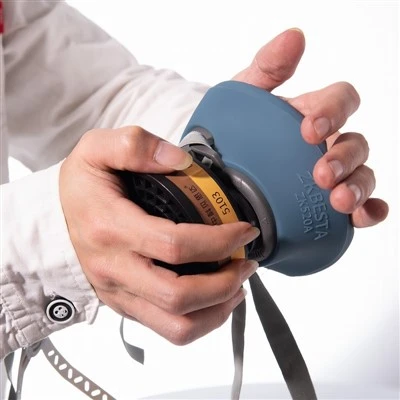
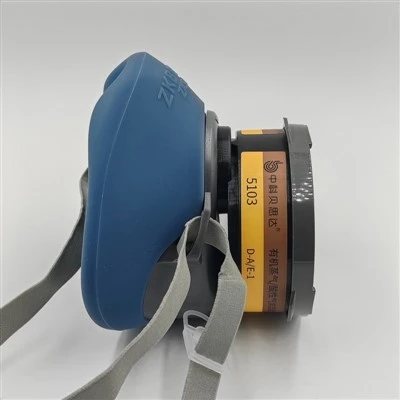
The CapEx model diverges significantly between single-use and multi-use systems. Disposable systems require no upfront hardware investment but incur immediate recurring costs. Reusable systems demand an initial outlay for the facepiece and mounting hardware, offset by long-term asset depreciation.
| Cost Component | Disposable FFP3 System | Reusable Elastomeric Half-Mask |
| Facepiece/Mask Body | Included in unit cost ($0.45 - $0.85/pc) | $12.50 - $18.00 per facepiece |
| Initial Filter/Cartridge | Included in unit cost | $4.50 - $6.00 per pair (A1B1E1K1/P3) |
| Asset Lifespan | Single shift (8 hours max) | 3-5 years (Silicone/EPDM material) |
| Per-Worker Year 1 Outlay | $117 - $221 (250 shifts) | $17.00 - $24.00 |


For facilities requiring high-volume deployment, wholesale ffp2 masks and disposable units offer minimal cash flow impact during onboarding, whereas reusable systems require capital allocation for facepieces and harness assemblies.
Contact now
Consumable Replacement Frequency and Hidden Variables
Consumable Replacement Frequency:
The primary cost driver in respiratory protection is not the hardware, but the replacement cycle of filtration media. This cycle is dictated by physical parameters, not arbitrary timeframes.
1.Particulate Filters (EN149:2001+A1:2009)
Particulate filters are replaced based on breathing resistance. When inhalation resistance exceeds 300 Pa at a flow rate of 95 L/min, the filter media is saturated with particulates and must be discarded. In high-dust environments (e.g., cement manufacturing, drywall sanding), this saturation point can be reached within 16-24 hours of actual wear time.
2.Organic Vapor Cartridges (EN14387)
Cartridge service life is determined by breakthrough time. For an A1 class organic vapor cartridge containing ≥50g activated carbon, the minimum breakthrough time is >60 minutes at standardized test concentrations. Actual field life depends strictly on vapor concentration, ambient humidity, and worker respiration rate.
Hidden Operational Costs:
1.Fit Testing Labor: Reusable systems require annual quantitative fit testing per EN136:1998 protocols. Each test requires approximately 15 minutes of HSE personnel time plus testing equipment amortization.
2.Sanitization & Storage: Reusable facepieces require post-shift cleaning and storage in sealed containers to prevent elastomer degradation. This adds an estimated 5 minutes of labor cost per user, per shift.
3.Waste Disposal Fees: Contaminated disposable masks are classified as hazardous waste in many jurisdictions, incurring disposal fees ranging from $0.15 to $0.40 per kg.
3-Year TCO Comparison Model
The following model compares the cumulative 3-year cost for 100 workers operating in a moderate-hazard industrial environment (e.g., metal fabrication with intermittent welding fumes).
| Cost Category | Disposable FFP3 (3-Year Total) | Reusable Half-Mask + P3 Cartridges (3-Year Total) |
| Year 1: Hardware/Facepieces | $0 | $1,500.00 |
| Year 1: Consumables | $15,000.00 (250 units/user) | $3,600.00 (P3 filters + cartridges) |
| Year 1: Maintenance/Labor | $0 | $1,200.00 (Cleaning + Fit Test) |
| Year 2: Hardware Replacement | $0 | $0 (Asset retained) |
| Year 2: Consumables | $15,750.00 (+5% inflation) | $3,780.00 (+5% inflation) |
| Year 2: Maintenance/Labor | $0 | $1,260.00 |
| Year 3: Consumables | $16,537.50 | $3,969.00 |
| Year 3: Maintenance/Labor | $0 | $1,323.00 |
| 3-Year Cumulative TCO | $47,287.50 | $16,632.00 |
| Cost Per User / Year | $157.63 | $55.44 |
This data demonstrates that while disposable systems carry zero maintenance overhead, the 3-year TCO for disposables is nearly 3x higher than reusable alternatives in this operational profile. For procurement teams evaluating [welding fume protection kit for metal fabrication], transitioning to reusable elastomeric systems yields significant budget reallocation opportunities.
Supply Chain Parameters for Procurement Teams
When integrating reusable systems into existing supply chains, verify the following manufacturing and logistics parameters:
| Parameter | Specification | Parameter |
| Standard MOQ (Facepieces) | 500 pcs / model | Standard MOQ (Facepieces) |
| Standard MOQ (Filter Pads) | 2,000 pcs / size | Standard MOQ (Filter Pads) |
| Production Lead Time | 15-25 days post-deposit confirmation | Production Lead Time |
| Shipping Terms | FOB Xiamen / CIF Destination Port | Shipping Terms |
| Quality Certification | ISO9001:2015, CE Cat III (Notified Body issued) | Quality Certification |
| Customization Support | OEM logo printing, custom packaging, proprietary mold development | Customization Support |
| Parameter | Specification | Parameter |
| Standard MOQ (Facepieces) | 500 pcs / model | Standard MOQ (Facepieces) |
| Standard MOQ (Filter Pads) | 2,000 pcs / size | Standard MOQ (Filter Pads) |
| Production Lead Time | 15-25 days post-deposit confirmation | Production Lead Time |
Customization Support OEM logo printing, custom packaging, proprietary mold development
As a verified China manufacturer and OEM supplier, ZKBESTA provides full technical documentation including EN149 test reports, EU Declaration of Conformity, and Notified Body certificates for all CE certified product lines. All reusable facepiece materials undergo aging tests to ensure elastomer integrity over the specified 5-year asset lifespan.
For HSE managers requiring detailed technical specifications for specific hazard environments, access our complete catalog of CE certified FFP3 respirator specifications.
Contact now
FAQ
1.Q: What is the typical break-even point when switching from disposable FFP3 masks to reusable elastomeric half-masks?
A: The break-even point occurs between 12-18 months of continuous industrial use. After this period, cumulative disposable mask purchases exceed the combined cost of reusable facepieces and replacement filters.
2.Q: How do I determine the correct filter replacement schedule for my facility?
A: Base replacement schedules on objective metrics: particulate filters when inhalation resistance exceeds 300 Pa @ 95 L/min; chemical cartridges based on calculated breakthrough time using contaminant concentration, carbon weight, and ambient humidity data.
3.Q: What documentation do I need to verify CE certification authenticity for imported respirators?
A: Request the 4-digit Notified Body number printed inside the mask shell and cross-reference it in the EU NANDO database. Valid suppliers must provide the full EN149 or EN140 test report alongside the EU Declaration of Conformity.
Contact now