Why Organic Vapor Cartridges Are Crucial for Aerospace Adhesive Curing Zones?
Inside an aerospace clean-room, the air smells faintly sweet-but that aroma is a cocktail of highly reactive solvents. Structural films such as epoxy-novolac, cyanate-ester and polyimide prepregs contain 30–40 % methyl ethyl ketone (MEK), methanol, N-methyl-2-pyrrolidone (NMP) and dimethylformamide (DMF). During autoclave cure cycles (120–180 °C, 6–8 bar), these solvents flash off, creating vapour concentrations that can exceed 1,200 ppm inside the tool cavity-sixty times the OSHA 8-hour TWA for MEK and forty times the ACGIH short-term limit for NMP. Prolonged exposure leads to headaches, liver enzyme changes and potential reproductive toxicity-unacceptable when assembling flight-critical composite wings.
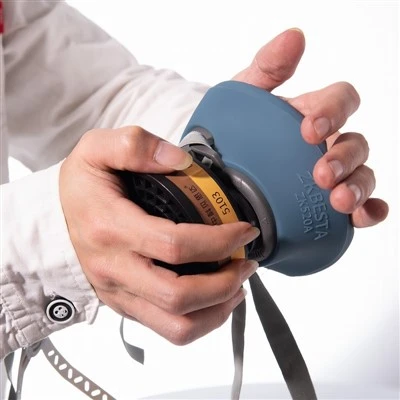
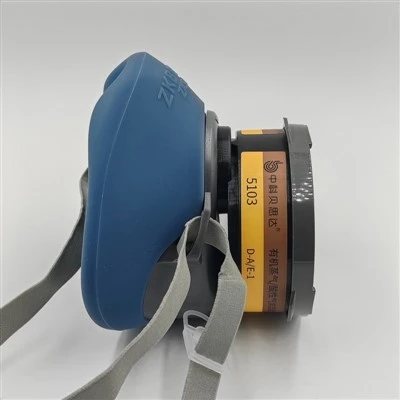
Organic-vapour (OV) cartridges are therefore the last line of defence inside the half-mask. Filled with copper-, chromium- and silver-impregnated activated carbon, they chemisorb ketone and amide molecules, converting them into non-volatile salts. A correctly fitted ABEK-type cartridge cuts MEK and NMP levels from 1,200 ppm to <10 ppm within the first minute of inhalation, achieving a protection factor >1,000. Yet carbon capacity is finite; under typical clean-room conditions (30 L min⁻¹ breathing, 22 °C, 45 % RH) breakthrough occurs after 35–45 hours; high-MEK aerospace films can shorten life by 30 %. Relying on odour is unreliable-NMP has poor warning properties-so OSHA now mandates a documented change schedule, not "when it smells."
Regulatory frameworks make OV cartridges mandatory. OSHA 29 CFR 1910.1000 and EU Directive 2017/2398 classify aerospace solvents as Category 1B carcinogens; employers must reduce exposure "as low as reasonably practicable." A quantitative fit-test programme with OV cartridges is therefore not optional-it is a legal prerequisite for cure-zone entry.
Beyond compliance, correct cartridge use boosts yield. When technicians trust their protection, they work faster and make fewer voids; breakthrough dizziness forces unscheduled breaks, costing up to 2 % of annual autoclave throughput. Modern OV units now incorporate humidity indicators and RFID tags that alert users at 90 % capacity, eliminating guesswork and safeguarding both health and profit inside the aerospace cure zone.