1. Technical Standards & Filtration Efficiency
The primary distinction lies in the governing standards. Disposable masks generally fall under EN149:2001+A1:2009 (Filtering Half Masks), while reusable masks adhere to EN140:1998 (Half Masks) or EN136:1998 (Full Face Masks) paired with EN143 (Particle Filters) or EN14387 (Gas Filters).
Filtration Performance Comparison
|
Feature |
Disposable (FFP2) |
Disposable (FFP3) |
Reusable (Half Mask + P3 Filter) |
|
Governing Standard |
EN149:2001+A1:2009 |
EN149:2001+A1:2009 |
EN140:1998 + EN143:2000+A1:2006 |
|
Min. Filtration Efficiency |
≥ 94% (NaCl/DOP) |
≥ 99% (NaCl/DOP) |
≥ 99.95% (NaCl/DOP) |
|
Max. Total Inward Leakage |
≤ 8% |
≤ 2% |
≤ 2% (Mask) + Filter Efficiency |
|
Typical Lifespan |
Single shift (8-12 hrs) |
Single shift (8-12 hrs) |
3-5 Years (Silicone body) |
|
Breathing Resistance |
< 240 Pa (Inhalation) |
< 240 Pa (Inhalation) |
< 50 Pa (Filter only) |
Engineering Note: Reusable systems often utilize pleated P3 filters (e.g., ZKBESTA P3 filters) which offer a larger surface area than flat FFP3 disposables. This results in significantly lower breathing resistance (<50Pa vs <240Pa), reducing worker fatigue during heavy physical labor.
2. Cost Analysis: Upfront vs. Lifecycle
Procurement decisions often focus on unit price, but HSE managers must calculate the Cost Per Protected Hour.
Scenario A: The Disposable Model (FFP3)
- Unit Cost: Low ($0.50 - $2.00 USD).
- Usage: 1 mask per day per worker.
- Annual Cost (1 Worker): 250 working days × $1.50 = $375/year.
- Pros: Zero maintenance, hygienic for high-turnover staff, no storage required.
- Cons: Higher waste volume, potential fit issues if not fit-tested daily, higher breathing resistance.
Scenario B: The Reusable Model (Silicone Half Mask + P3 Filters)
- Initial Investment: Mask Body ($10 - $25) + 2x P3 Filters ($10). Total: ~$40.
- Maintenance: Filters changed every 2-4 weeks (depending on dust load); Mask body cleaned weekly.
- Annual Cost (1 Worker): Mask ($20 amortized) + 24 filter sets (2/month × $10) = $260/year.
- Pros: Lower TCO after 8-10 months, superior seal (liquid silicone), compatible with other PPE (welding helmets), robust protection.
- Cons: Requires cleaning protocol, initial capital outlay is higher.
- Verdict: For stable workforces in high-dust environments (mining, heavy construction), Reusable Respirators yield a ~30% cost saving in Year 1 and ~70% in subsequent years. For transient labor or low-dust/short-duration tasks, Disposable FFP3 remains the logistical choice.
3. Material Science & Ergonomics
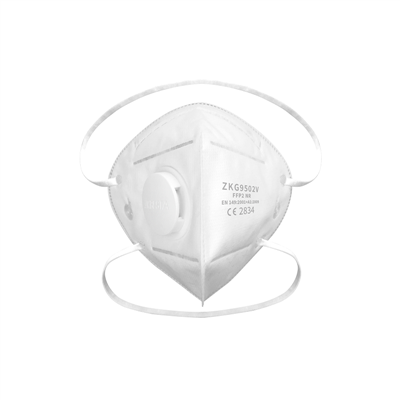
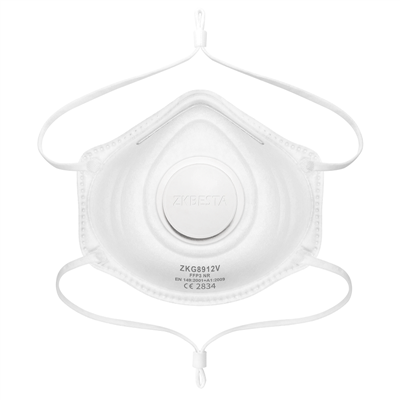
Disposable Masks (Melt-blown Technology) Modern high-quality disposables, such as the FFP3 Particle Filtering Half Mask, utilize high-voltage electrostatic spinning nanofiber membranes. This technology creates a web of fibers with diameters significantly smaller than traditional microfibers, enhancing the capture of PM2.5 and aerosols without drastically increasing breathing resistance.
Key Feature: Integrated exhalation valves (Patent No. ZL201620897668.5) reduce heat and moisture buildup, a common complaint with disposable masks.
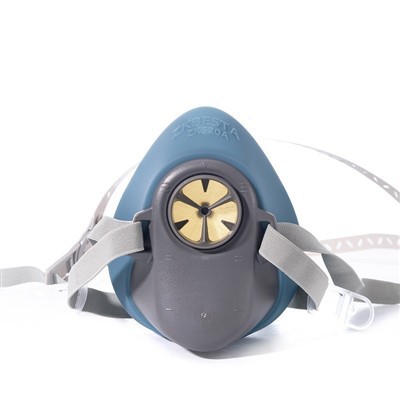
Reusable Masks (Elastomers) Reusable masks typically use Thermoplastic Elastomer (TPE) or Liquid Silicone.
Silicone: Offers superior skin compatibility (hypoallergenic), withstands high-temperature cleaning, and maintains elasticity over 5+ years.
TPE: A cost-effective alternative, though slightly less durable than silicone.
Fit: Reusable masks often feature a 4 or 6-point harness and adjustable nose bridges, ensuring a secure fit for diverse facial structures, crucial for passing quantitative fit tests (QNFT).
4. Application-Specific Recommendations
Welding & Metal Fabrication
Challenge: Metal fumes (Manganese, Chromium VI), heat, and UV radiation.
Recommendation: Reusable Half Mask with P3 Filters.
Reasoning: Welding generates high concentrations of fine particulate. A reusable mask with a low breathing resistance P3 filter reduces fatigue. The silicone face seal is easier to clean from welding spatter and oils than a disposable mask.
Product Match: Welding fume protection kit for metal fabrication.
Chemical & Pharmaceutical
Challenge: Organic vapors, acid gases, and powders.
Recommendation: Reusable Half/Full Face Mask + Combination Cartridges (A2B2E2K2-P3).
Reasoning: Disposable masks cannot filter gases effectively for long durations. Reusable systems allow for specific cartridges (e.g., Activated Carbon for organic vapors) to be swapped while retaining the facepiece.
Spec: Ensure cartridges meet EN14387 with a breakthrough time >60 mins for the specific contaminant.
General Construction & Demolition
Challenge: Silica dust, concrete dust, intermittent exposure.
Recommendation: Disposable FFP3 or Reusable Half Mask.
Reasoning: If the workforce is large and transient, bulk FFP3 disposables are easier to distribute. If the crew is permanent, reusable masks prevent "mask fatigue" and ensure better compliance.
5. Supply Chain & Compliance for Buyers
When sourcing from a manufacturer like ZKBESTA, verify the following to ensure supply chain integrity:
Certification Validity:
Check the CE Certificate against the NANDO database.
Verify the standard: EN149:2001+A1:2009 (Disposable) vs. EN140/EN143 (Reusable).
Ensure the factory holds ISO9001:2015 for quality management.
Production Capacity:
Disposables: Look for fully automatic production lines. ZKBESTA operates 19 lines, capable of producing 100,000+ units/day, ensuring stability for large tenders.
Reusables: Injection molding capabilities for TPE/Silicone parts ensure consistent dimensions and seal integrity.
Customization (OEM/ODM):
Disposables: Custom printing (Logo/Standard) usually requires an MOQ of 20,000+ pieces.
Reusables: Logo printing on masks or custom packaging is feasible at lower MOQs (e.g., 500-1,000 pieces).
Summary Table: Selection Matrix
|
Criteria |
Disposable FFP3 (EN149) |
Reusable Silicone (EN140 + P3) |
|
Best For |
Short-term, high turnover, hygiene-critical |
Long-term, high dust, cost-sensitive |
|
Breathing Resistance |
Moderate (<240 Pa) |
Low (<50 Pa) |
|
Maintenance |
None (Discard after use) |
Daily cleaning, periodic filter change |
|
Storage |
Bulky (1 mask = 1 unit) |
Compact (Mask + 2 filters lasts months) |
|
Environmental Impact |
High waste |
Low waste (only filters discarded) |
|
Procurement Strategy |
Bulk commodity buying |
Capital equipment + Consumables |
FAQ
Q: Can we use your reusable respirator filters with other major brand masks?
A: Our filters utilize the standard EN143 bayonet mount (compatible with 3M-style connections). They fit most EN140-certified half masks on the market. However, we recommend testing a sample to ensure the seal integrity meets your specific safety protocols.
Q: What is the lead time for a bulk order of CE-certified FFP3 masks?
A: For standard white FFP3 masks, our automated lines allow for a lead time of 15-25 days for a full container load. For OEM orders with custom printing, the lead time is approximately 30 days. We support FOB Xiamen terms.
Q: Do your disposable masks contain latex?
A: No. Our disposable FFP2 and FFP3 masks use synthetic straps and latex-free materials to prevent skin sensitization, complying with the skin sensitization requirements of the PPE Regulation (EU) 2016/425.