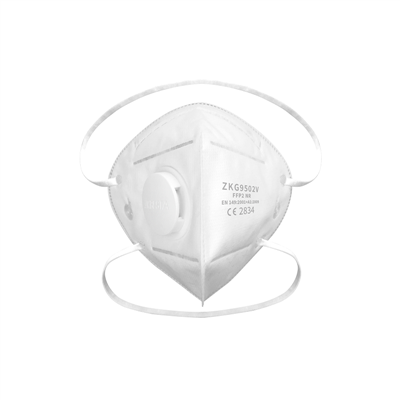
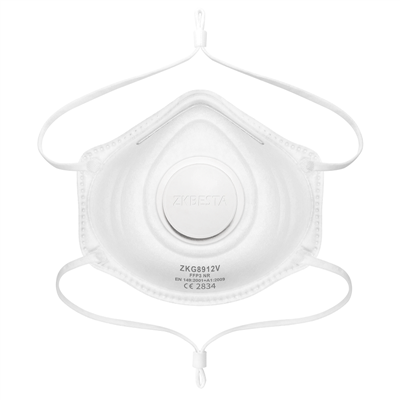
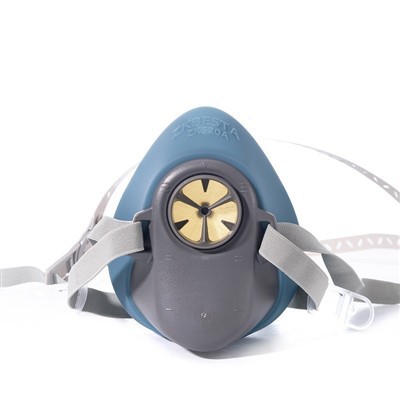
Effective price negotiation for Personal Protective Equipment (PPE) sourced from China requires moving beyond simple unit price haggling to a Total Cost of Ownership (TCO) analysis. This involves understanding the direct correlation between raw material indices, order volume (MOQ), and the technical compliance costs embedded in CE/EN certified products. For procurement professionals, the objective is to secure a sustainable price point that guarantees supply chain integrity without compromising on the material science that ensures worker safety.
1. Deconstructing the Bill of Materials (BOM)
To negotiate effectively, one must first understand the cost drivers. PPE pricing is not arbitrary; it is heavily influenced by the global commodities market. A valid negotiation starts with acknowledging these baseline costs.
Key Raw Material Indices:
1.Polypropylene (PP): The primary feedstock for melt-blown and spun-bond non-woven fabrics used in disposable FFP2/FFP3 masks. Prices fluctuate with crude oil markets.
2.Thermoplastic Elastomers (TPE) & Silicone: Essential for reusable half-mask bodies. Medical-grade or food-grade silicone commands a premium over industrial grades due to skin-safety certifications.
3.Activated Carbon & Adsorbents: Used in gas cartridges (A1/B1/E1/K1). The iodine number and CTC (Carbon Tetrachloride) activity levels determine the filtration efficiency and cost.
4.Polycarbonate (PC): Used for safety visors and face shields. Virgin PC offers superior impact resistance (EN166:2001) compared to recycled PC, which may be brittle.
5.Negotiation Tactic: Ask the supplier, "How does your current pricing model account for the recent volatility in polypropylene/spunbond prices?" This demonstrates market awareness and prevents the supplier from padding margins under the guise of material cost increases.
2. The MOQ vs. Unit Price Matrix
In Chinese manufacturing, the Minimum Order Quantity (MOQ) is the single most significant lever for price reduction. This is due to the amortization of setup costs and the efficiency of continuous production runs.
Cost Components Breakdown:
|
Cost Component |
Impact of Low MOQ (<1,000 pcs) |
Impact of High MOQ (>20,000 pcs) |
|
Machine Setup |
High cost per unit (amortized over few items) |
Negligible cost per unit |
|
Labor Efficiency |
Frequent line changeovers reduce output |
Continuous run maximizes output |
|
Material Waste |
Higher percentage of start-up waste |
Optimized material usage |
|
Packaging |
Manual packing often required |
Automated packing lines viable |
ZKBESTA Production Context: For a factory like ZKBESTA, operating 19 fully automatic production lines allows for high-volume efficiency. However, for OEM orders requiring custom silk-screen printing or mold modifications, the MOQ dictates the feasibility.
Standard Items: Lower MOQs are viable as raw materials are kept in stock.
Custom OEM: An MOQ of 2,000–5,000 pieces is typically required to justify the downtime for mold changes or printing plate setup.
Negotiation Tactic: Instead of asking for a lower price on 500 pieces, propose a "Tiered Pricing Structure." Commit to a total annual volume (e.g., 50,000 units) delivered in quarterly batches of 12,500. This secures the high-MOQ price while managing your inventory cash flow.
3. The "Low Price" Quality Trap
In the PPE industry, a price that is significantly lower than the market average is a leading indicator of non-compliance. As a technical buyer, you must distinguish between "competitive pricing" and "engineering downgrades."
Common Cost-Cutting Measures to Watch For:
- Filtration Media: Substituting high-efficiency electret melt-blown fabric with standard spun-bond or low-grade melt-blown. This results in high breathing resistance or failure to meet the ≥94% (FFP2) / ≥99% (FFP3) filtration efficiency required by EN149:2001+A1:2009.
- Strap Elasticity: Using recycled rubber bands that lose tension after 4 hours, failing the slippage test.
- Valve Diaphragms: Using thinner silicone in exhalation valves, leading to premature failure and inward leakage.
- Shell Material: Using recycled HDPE for safety helmets, which compromises impact absorption (EN397) and UV stability.
- Verification Protocol: Never approve a price reduction without validating the technical specs.
"If you can reduce the price by 15%, please specify which component of the BOM has been modified. Has the grammage (gsm) of the filter layer been reduced? Is the activated carbon content in the cartridge lower?"
4. Leveraging Compliance as a Value Metric
Certification is not just a badge; it is a cost center. A genuine CE certificate from a Notified Body (e.g., SGS, TUV, SATRA) involves rigorous factory audits and product testing.
- The "Fake Certificate" Discount: Some suppliers offer lower prices because they use "shadow" certificates or self-declarations that do not meet EU Regulation 2016/425.
- Risk: Goods seized at customs, liability lawsuits, and brand damage.
- ZKBESTA Standard: As a manufacturer deeply committed to R&D and holding patents for high-pressure electrostatic spinning nanofiber technology, legitimate compliance is built into the cost.
- Negotiation Tactic: Use compliance as a bargaining chip for terms rather than price. If the supplier cannot lower the unit price due to high raw material costs, negotiate for:
- Free Pre-Shipment Inspections: Third-party inspection costs absorbed by the factory.
- Spare Parts Ratio: Free replacement valves or head harnesses (e.g., 1 free per 100 units).
- Payment Terms: Extension from 30% deposit/70% before shipment to a Letter of Credit (LC) or OA (Open Account) for established relationships.
FAQ
Q: What is the typical price difference between FFP2 and FFP3 masks in bulk orders?
A: The price difference is driven by the filter media. FFP3 requires more layers of high-efficiency melt-blown fabric to achieve ≥99% filtration compared to FFP2's ≥94%. Typically, FFP3 is 20-30% more expensive than FFP2 due to material costs and higher rejection rates during production.
Q: Can you lower the price if we waive the individual color box packaging?
A: Yes. Switching from individual color boxes to bulk packing (e.g., 10 or 20 pieces per large polybag) significantly reduces packaging material costs and labor time. It also allows approximately 30% more units to fit into a 40HQ container, reducing your landed freight cost per unit.
Q: Why is your price higher than other suppliers on Alibaba?
A: Our pricing reflects the use of virgin raw materials and the cost of maintaining valid CE certifications (EN149, EN405, etc.) issued by recognized Notified Bodies. Lower-priced alternatives often use recycled materials or lack valid certification, posing a high risk of customs rejection and safety failure. We invite you to compare test reports side-by-side.

ZKBESTA a Leading Respirator Manufacturer In China
Contact our sales engineering team to review your specifications and receive a tiered quotation based on your annual volume..