What is the "Total Inward Leakage" (TIL) requirement under EN 149, and how does it relate to real-world comfort and protection?
Total Inward Leakage (TIL)
EN 149 requires that Total Inward Leakage for filtering half masks encompasses three sources: face seal leakage, exhalation valve leakage (where applicable), and filter penetration. The standard classifies protection levels based on TIL limits:
FFP1 Level: TIL limit not exceeding 22%, filter penetration not less than 80%. Suitable for low-toxicity particulates with maximum exposure concentrations not exceeding 4 times the Occupational Exposure Limit.
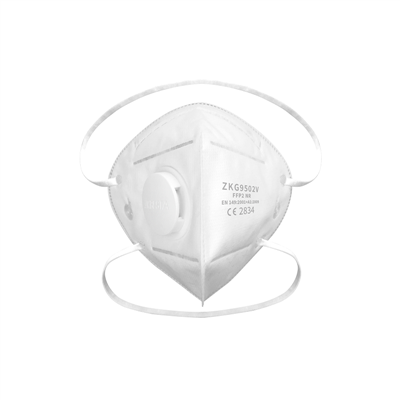
FFP2 Level: TIL limit not exceeding 8%, filter penetration not less than 94%. Suitable for medium-toxicity particulates (such as welding fume and general mineral dust) with maximum exposure concentrations not exceeding 10 times the Occupational Exposure Limit.
FFP3 Level: TIL limit not exceeding 2%, filter penetration not less than 99%. Suitable for high-toxicity or carcinogenic particulates (such as asbestos, silica dust, and certain viral aerosols) with maximum exposure concentrations not exceeding 20 times the Occupational Exposure Limit.
The Gap Between TIL Laboratory Performance and Real-World Protection
EN 149 TIL testing employs standardized headforms or selected test subject panels with limited facial feature coverage. The diversity of actual workers' facial morphology (nasal bridge height, cheekbone width, jawline contour, facial hair, etc.) far exceeds laboratory samples, resulting in actual leakage rates potentially significantly higher than certified values.
Laboratory test movement protocols are relatively mild. In actual work, wearers perform large-range head movements, bending, load-bearing, and facial perspiration, all of which dynamically alter the mask-to-face fit condition. Instantaneous leakage rates may far exceed average TIL values.
TIL certification assumes the respirator is worn correctly. However, field observational studies indicate that over 50% of untrained workers exhibit significant donning errors (such as loose head straps, unshaped nose clips, or inverted masks). Under these conditions, actual TIL may reach several multiples of the certified value.
The Conflict Between TIL and Real-World Comfort
Achieving lower TIL typically requires higher strap tension, more rigid sealing edge materials, and tighter facial contact pressure. This directly causes facial pressure marks and pain (particularly at the nasal bridge and cheekbones), skin damage from extended wear (such as contact dermatitis and pressure sores), and mechanical restriction of speech and head movement.
Low TIL implies high internal mask seal, making it difficult for exhaled warm, humid air to escape. In hot environments or high-intensity physical work, the temperature and humidity within the mask microenvironment rise rapidly, causing lens fogging (when worn with eye protection), intensified facial perspiration that actually compromises the sealing interface, subjective sensations of suffocation and anxiety, and provoking wearers to loosen straps or remove the mask.
The dense filter media and tight seal designed to maintain low TIL increase both inspiratory and expiratory resistance. Wearers may adopt rapid, shallow breathing patterns due to breathing difficulty, reducing effective ventilation, or loosen the mask to relieve resistance-directly undermining the TIL design objective.
Professional Strategies to Bridge Laboratory TIL and Real-World Protection
1.Do not rely solely on EN 149 TIL certification labels. Implement workplace-based quantitative fit testing using equipment such as PortaCount to measure individual actual TIL under real work postures and PPE configurations. This is the only reliable method to identify individuals who "passed certification but actually exhibit excessive leakage."
2.Provide multiple sizes and models for selection. No single design fits all facial morphologies. Establish a "fit-test-record" workflow to match each worker with the model offering optimal TIL performance and acceptable subjective comfort.
Laboratory TIL values assume correct donning. Repeated training must ensure proper nose clip shaping technique (using both hands, not single-hand sliding), symmetrical head strap tension adjustment, positive/negative pressure seal self-check after each donning, and understanding the distinction between comfort and looseness.
3.In hot environments, even if the mask itself meets TIL standards, facial perspiration will dynamically compromise the seal. Combine with heat stress management measures (such as cooling rest areas, job rotation, and PAPR alternative solutions) to reduce seal failure caused by thermal discomfort.
Procurement Recommendations for Buyers
Understanding the Business Implications of TIL Certification
EN 149 TIL limits are statutory thresholds for market entry, but buyers must clearly recognize: TIL certification only represents performance under standardized laboratory conditions, with specific test subject panels, following prescribed protocols. It does not equal the actual protection level for every worker in your organization.
Treat TIL certification as a baseline condition for supplier qualification screening, not the sole basis for procurement decisions. Require suppliers to provide complete TIL test reports and confirm that testing bodies hold Notified Body accreditation.
Matching TIL Requirements to Exposure Risk Levels
For low-risk scenarios (general industrial dust, non-toxic particulates), prioritize FFP1-level products. Although FFP2 and FFP3 offer lower TIL, over-protection brings unnecessary breathing resistance, heat-humidity accumulation, and procurement cost increases. In scenarios where TIL not exceeding 22% meets protection needs, forcing FFP3 procurement represents dual waste of budget and wearer comfort.
For medium-risk scenarios (welding fume, general mineral dust), FFP2 represents the cost-effectiveness balance point. TIL not exceeding 8% adequately covers most exposure scenarios within 10 times the Occupational Exposure Limit, with significantly lower breathing resistance than FFP3 and better wearer compliance. Consider FFP2 models with exhalation valves during procurement to improve expiratory comfort while maintaining TIL compliance.
For high-risk scenarios (silica dust, asbestos, carcinogenic particulates), FFP3-level procurement is mandatory with TIL not exceeding 2%. However, buyers must recognize: FFP3's stringent TIL requirements are extremely sensitive to correct donning. If effective donning training and fit verification capabilities are lacking on-site, FFP3's theoretical advantages may not materialize. In such cases, shift procurement budget toward Powered Air-Purifying Respirators or Supplied-Air Respirators to fundamentally bypass face seal dependence.
The Relationship Between TIL and Total Cost of Ownership
When procuring respiratory protection, unit price is only part of the cost. TIL performance directly impacts hidden costs.
Hidden costs of high-TIL products include occupational health claims and compensation from leakage, regulatory penalties from inadequate protection, and wearer self-removal and non-compliant behavior from poor comfort.
Hidden costs of low-TIL products include higher unit prices (FFP3 typically costs 30% to 100% more than FFP2), productivity loss from high breathing resistance, increased rest break frequency from heat-humidity discomfort, and medical consultations and complaint handling from facial pressure marks and skin issues.
Establish a Total Cost of Ownership evaluation model incorporating TIL performance with projected utilization rates, work intensity, ambient temperature, and exposure duration. For high-intensity work in hot, humid environments, the higher procurement cost of Powered Air-Purifying Respirators may be offset by productivity gains and compliance certainty.
TIL-Related Indicators in Supplier Evaluation
Require suppliers to provide detailed TIL test data distributions, not merely pass/fail conclusions. Focus on test sample sizes and test subject facial feature coverage.
Inquire whether suppliers offer multiple size options. Even TIL-certified single-size masks may not fit the facial diversity of your workforce.
Confirm suppliers' balance between filter penetration efficiency and total leakage. Some products may achieve TIL compliance by sacrificing filter efficiency and relying on tighter face seals, which intensifies wearer discomfort.
Before bulk procurement, require suppliers to provide sufficient trial samples for target user groups to test in actual work scenarios. Collect feedback on facial pressure after 15 minutes of wear, perceived displacement during speech and head movement, lens fogging conditions, and subjective breathing effort. Cross-validate this qualitative feedback with subsequent quantitative fit test results to identify products that "passed certification but perform poorly in the field."
Procurement Strategy: From Single Product to System Solution
Do not procure respirators in isolation. TIL performance realization depends on a complete protection system. Synchronized procurement should include fit testing equipment or outsourced services (PortaCount or equivalent), donning training course suppliers or internal capability building, and interface design compatibility with other PPE (hard hats, safety goggles, hearing protectors).
Procurement contracts should include performance review clauses. Within 3 to 6 months after initial product deployment, evaluate actual TIL performance through workplace quantitative fit testing data, and negotiate with suppliers for model adjustments, size ratio changes, or replacement solutions.
Procurement Decision Recommendations for Key Scenarios:
- For high-temperature, high-humidity environments combined with high-toxicity exposure, procure Powered Air-Purifying Respirators with high-efficiency filters. This solution eliminates face seal dependence (TIL concept does not apply); focus on blower airflow and battery endurance.
- For workforces with diverse facial characteristics, conduct multi-brand or multi-model trials before centralized procurement. No single product fits everyone; reserve model adjustment flexibility.
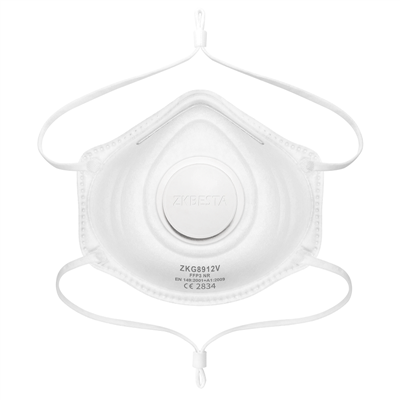
- For high-turnover temporary worker scenarios, procure disposable FFP2 or FFP3 with simplified qualitative fit testing. With limited training time, select designs with higher donning fault tolerance (cup-style preferred over fold-flat).
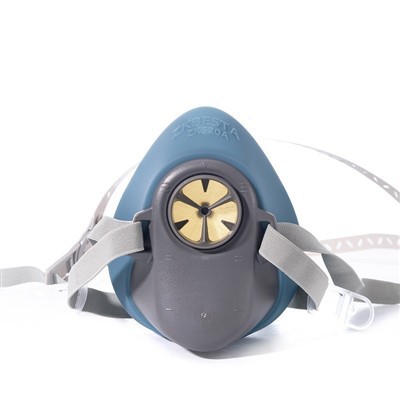
- For continuous work exceeding 4 hours, procure elastomeric half masks with replaceable filters. The mask body is cleanable and reusable, reducing long-term costs while monitoring filter resistance degradation over time.
Final Procurement Recommendation
TIL is an important input for procurement decisions but should not be the sole input. As a buyer, your core mission is ensuring enterprise-level protection certainty, not individual product certification compliance.
With over 12 years of experience in respirator manufacturing, ZKBESTA provides customers with professional technical guidance for product selection and purchasing.
For more information, please visit our official website: https://www.cas-bestppe.com/