Modular Respirator Systems: How to Mix & Match Filters for Multi-Hazard Workplaces?
An effective modular respirator system reduces Total Cost of Ownership (TCO) by 30-50% compared to disposable alternatives in multi-hazard environments. The core engineering principle is the separation of the reusable facepiece (complying with EN140:1998) from the replaceable filter element (complying with EN143:2000 for particles or EN14387:2021 for gases). For procurement: verify the bayonet interface standard (EN148-1) for cross-compatibility, and calculate filter change frequency based on local contaminant concentration.
Engineering Logic of the Modular System
The modular design decouples the sealing mechanism (silicone/TPR face seal) from the filtration media (melt-blown/activated carbon). This allows for independent certification and replacement.

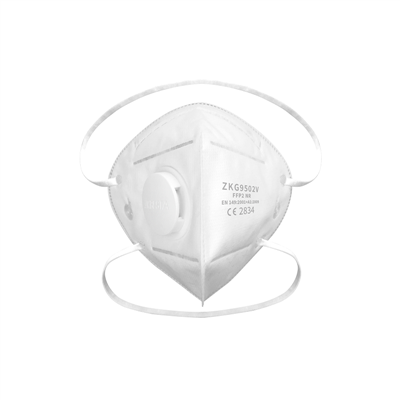
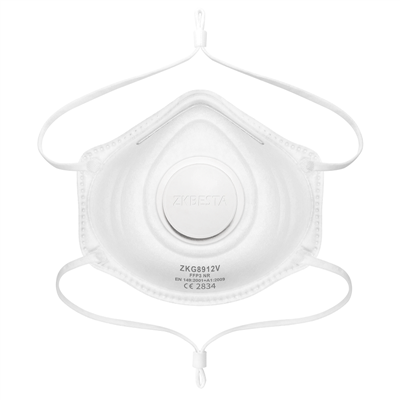
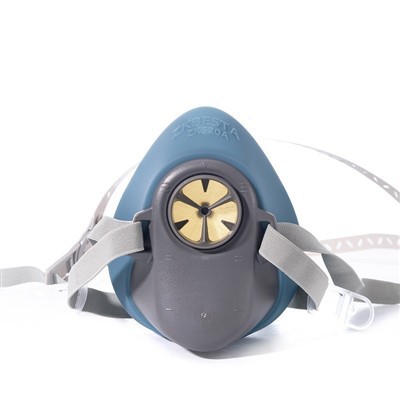
The facepiece acts as the structural platform. ZKBESTA's ZK8500 series, certified to EN140:1998, features a classic bayonet mount accepting all EN148-1 compliant filters. The internal breathing tube design lowers the center of gravity, reducing neck strain during 8-hour shifts.
The filter element acts as the consumable barrier. Particulate filters (EN143) use electrostatically charged melt-blown polypropylene to capture solids and mists. Gas cartridges (EN14387) use impregnated activated carbon to adsorb specific vapors. The modular approach ensures the user only replaces the exhausted media, retaining the durable facepiece.
Interchangeable Filter Matrix for Hazard Classification
Matching the correct filter to the specific hazard is a requirement of the EU PPE Regulation (EU) 2016/425. The following matrix defines the technical specifications for common industrial applications based on EN standards.
|
Hazard Type |
Filter Classification |
Test Standard |
ZKBESTA Product Spec |
Typical Service Life* |
|
Solid Particulates (Dust, Welding Fume) |
P3 (APF 20) |
EN143:2000+A1:2006 |
ZK2000AG: Efficiency ≥99.95% @ 0.3μm |
40-50 hours |
|
Oil-based Mists (Coolants, Spray Paint) |
P3 (Oil Resistant) |
EN143:2000+A1:2006 |
ZK793 (KP100): Efficiency ≥99.97% |
30-40 hours |
|
Organic Vapors (Solvents, Gasoline) |
A1 (300ppm limit) |
EN14387:2021 |
ZK2000: Breakthrough time >60min @ 300ppm |
8-10 hours |
|
Acid Gases (SO2, Cl2, HCl) |
B1 (500ppm limit) |
EN14387:2021 |
Custom: Impregnated activated carbon core |
8-10 hours |
|
Ammonia & Derivatives |
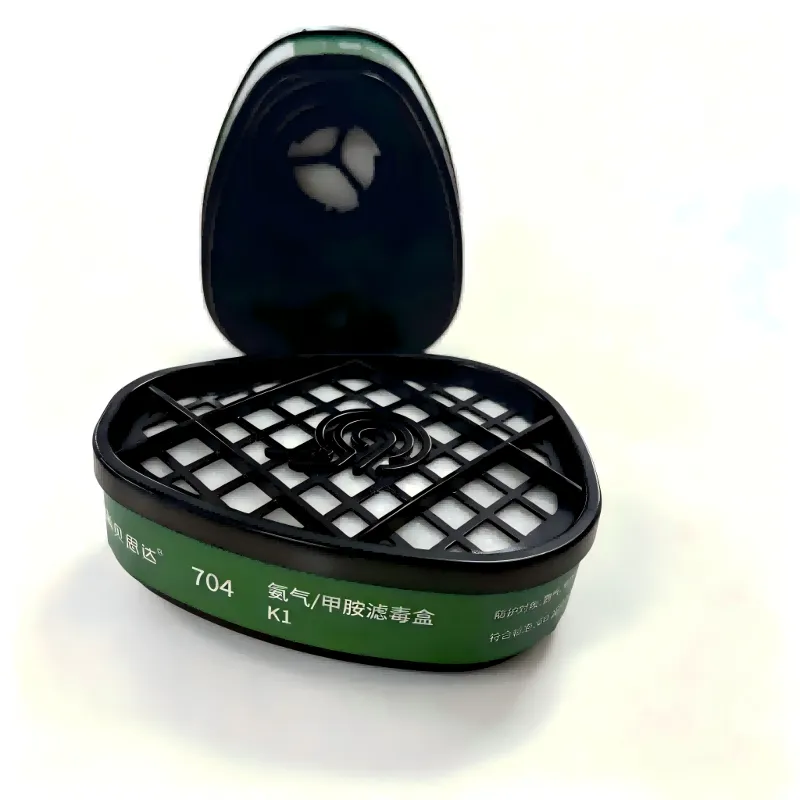
K1 (500ppm limit) |
EN14387:2021 |
704 Series: Specific for NH3 & methylamine |
8-10 hours |
|
Multi-Gas (Acid+Org+Ammonia) |
Multi-Class |
EN14387:2021 |
Custom: Layered sorbent bed |
8-10 hours |
*Service life is dependent on contaminant concentration, temperature, and humidity. A formal change schedule must be established per site risk assessment.
Technical Compatibility and Installation Protocol
Cross-brand compatibility is determined by the physical interface standard. The EN148-1 (22mm x 15mm) bayonet mount is the industry standard for dual-filter respirators. ZKBESTA filters are manufactured to these precise dimensional tolerances, ensuring a secure lock and airtight seal with leading brand facepieces.
The installation sequence follows a strict quarter-turn protocol to prevent cross-threading and ensure proper valve alignment.
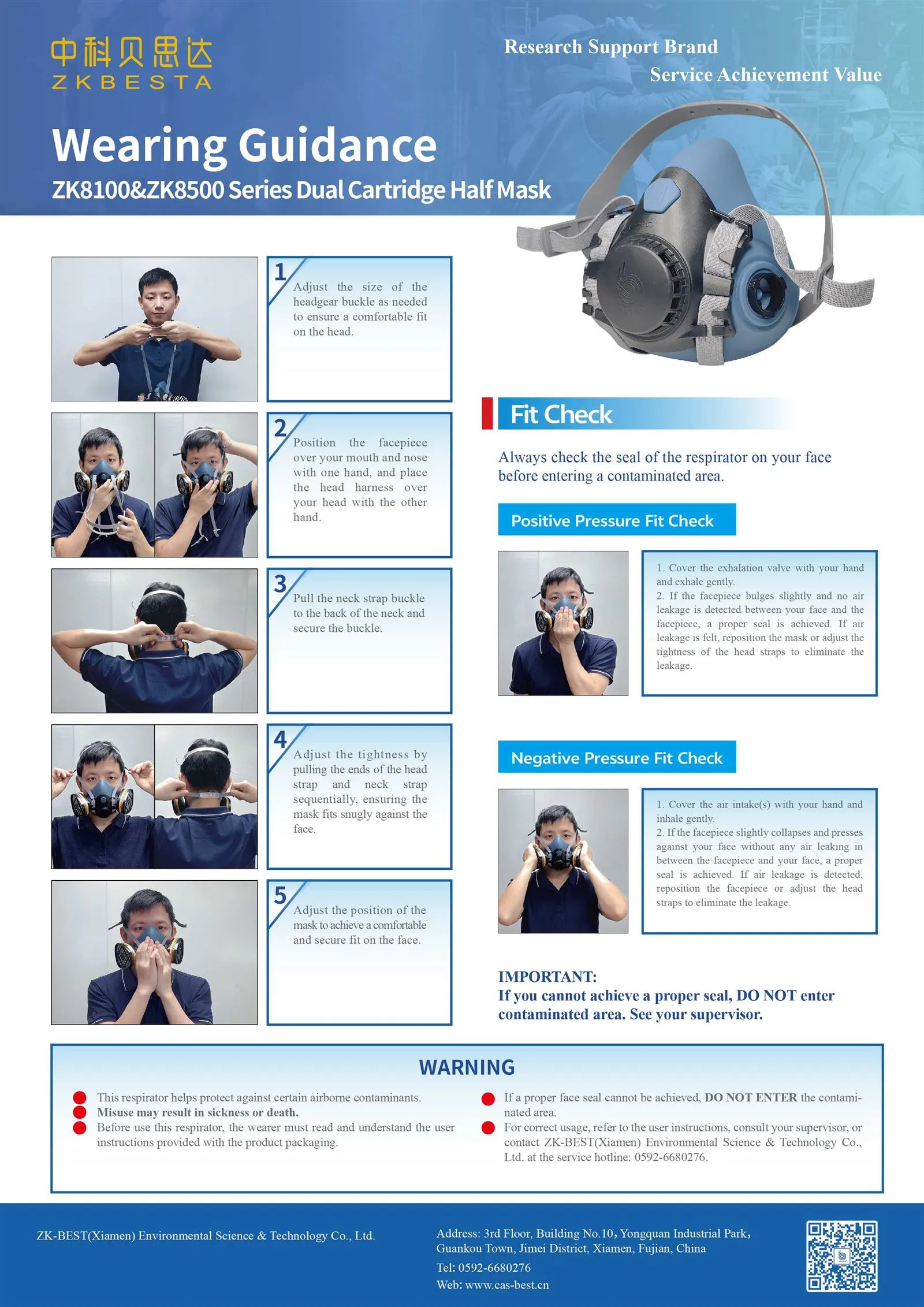
Pre-Check: Inspect the filter seal (O-ring) for nicks or debris. Verify the expiration date on the vacuum seal.
Insertion: Align the filter lugs with the facepiece slots. Push firmly until fully seated.
Locking: Rotate the filter clockwise 90 degrees until an audible click is heard. The locking mechanism secures the filter against accidental dislodgement during high-movement tasks.
Seal Check: Perform a negative pressure check by covering the inhalation valves and inhaling gently. The facepiece should collapse slightly and hold for 10 seconds without leakage.
Cost Modeling: Modular vs. Disposable in Bulk Procurement
For supply chain managers, the Total Cost of Ownership (TCO) calculation favors modular systems in scenarios requiring more than 4 hours of protection per week.
The calculation formula is as follows:
TCO = (Facepiece Cost / Expected Lifespan) + (Filter Cost x Usage Frequency)
Consider a mining operation requiring P3 protection (EN149:2001).
- Solution A (Disposable FFP3): 200 workers x 5 shifts/week x 52 weeks = 52,000 units/year. At $1.50/unit, the annual cost is $78,000. Face fit testing is required annually.
- Solution B (Modular System): 200 facepieces @ $15.00 (5-year lifespan) = $3,000 Capex. 200 workers x 10 shifts/week (filter change every 2 shifts) x 52 weeks = 10,400 filters/year. At $2.00/filter, the Opex is $20,800. Total Year 1 cost: $23,800.
The modular system presents a 70% cost saving in Year 1, increasing in subsequent years as only filters require replacement. Additionally, the silicone facepiece generates 80% less waste volume compared to disposable masks, aligning with ESG waste reduction targets.
Industry-Specific Configuration Examples
Different industrial processes demand specific filter combinations. The following configurations are validated against common workplace exposure limits.
1)Shipyard Painting & Coating
This environment contains both isocyanate vapors (toxic) and overspray particles. A dual-filter system with a pre-filter is mandatory.
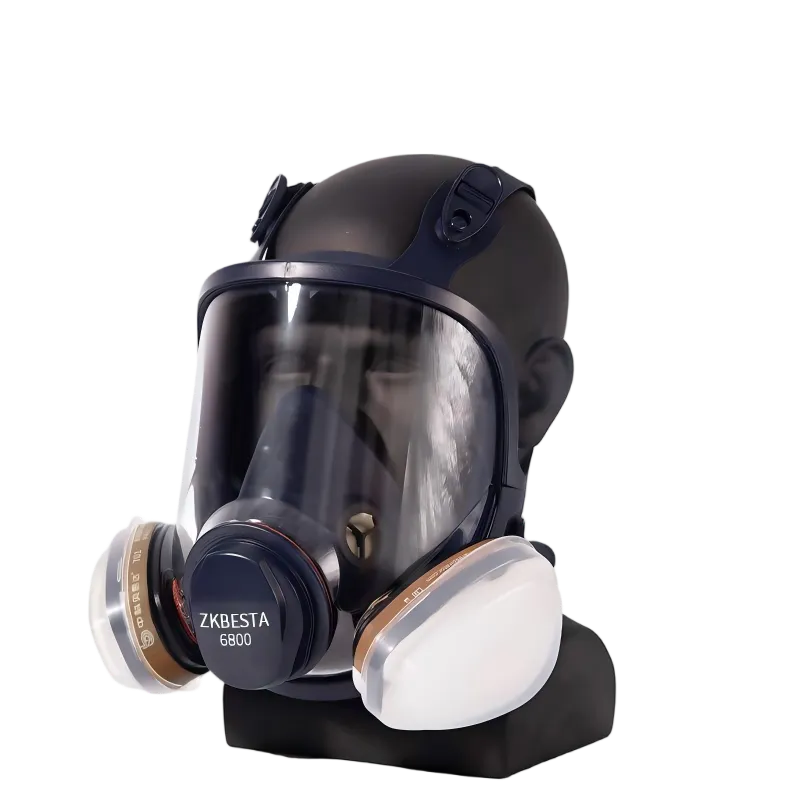
Facepiece: ZK6800 Full Face Mask (EN136:1998 Class 1) for eye protection against splashes.
Filter: 702 Series (EN14387 A1/P3). The A1 layer adsorbs paint solvents; the P3 layer captures paint mist.
Pre-Filter: Polyurethane foam sleeve to extend main filter life by blocking large pigment particles.
2)Cement & Mineral Processing
High concentrations of silica dust (PM10 and PM2.5) require maximum particulate efficiency and low breathing resistance.
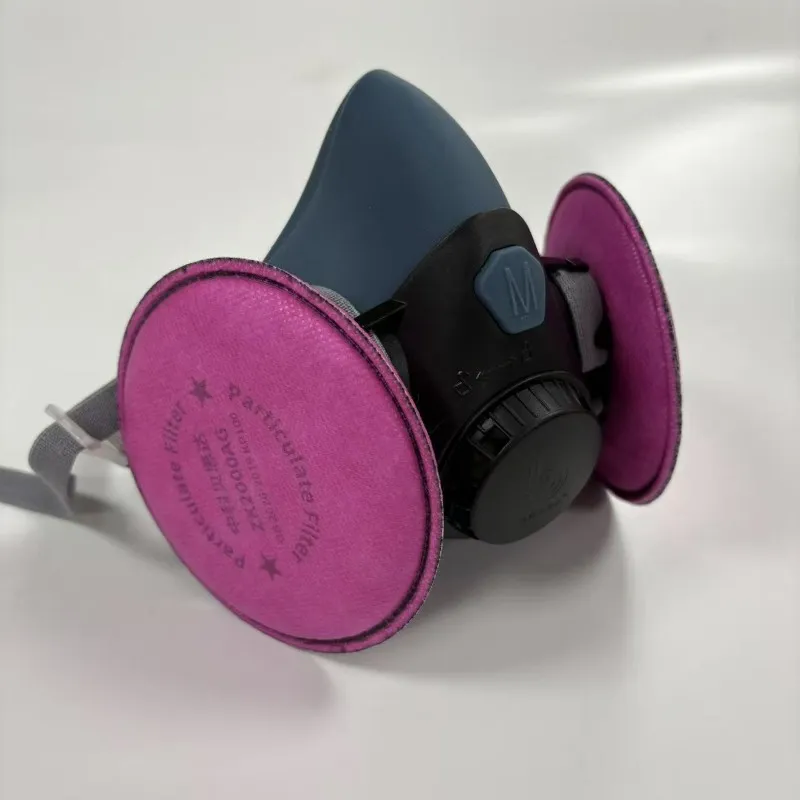
Facepiece: ZK8500 Half Mask (EN140) with exhalation valve.
Filter: ZK2000 Series (GB2626 KP100). Efficiency >99.97% for non-oil and oil-based particulates common in kiln operations.
Feature: High-flow design maintains <30Pa inhalation resistance even when loaded with dust.
3)Chemical Synthesis & Handling
Protection against specific gas mixtures requires specialized carbon formulations.
Scenario: Handling ammonia solutions and organic solvents simultaneously.
Filter: Combination Cartridge (K1 + A1). Uses layered sorbent beds to prevent channeling.
Monitoring: Humidity pre-conditioning test performed per EN14387 to ensure performance in high-moisture labs.
Procurement Specifications and Supply Chain Data
Sourcing modular respirators requires verification of the notified body certificate and production capacity to meet project timelines.
ZKBESTA operates 10 dedicated half/full mask production lines, maintaining a standard lead time of 15-25 days for container loads after payment. The quality management system is certified to ISO9001:2015, with product certificates issued under EU Regulation (EU) 2016/425 by accredited bodies.
The following table outlines the commercial terms for global distribution.
|
Parameter |
Value / Term |
Verification Method |
|
Certification |
CE (EN140, EN143, EN14387), GB2626, GB2890 |
Certificate number available in NANDO database |
|
MOQ (OEM) |
500 pcs/model (Logo printing), 2000 pcs (Color/Mold custom) |
Sample available against freight charge |
|
Packaging |
1 pc/box, 10 boxes/bag, 1000 pcs/CTN (Custom packaging allowed) |
Carton dimensions: 50x40x30cm |
|
Shipment |
FOB Xiamen, China. |
Shipping marks per LTA/BLU requirements |
|
Warranty |
5 years for silicone components (No cracking/loss of elasticity) |
Defects replaced in next order |
Quality Control and R&D Capabilities
The factory implements full-process monitoring from raw material (electrostatic melt-blown cloth) to final assembly.
Raw Material: Melt-blown fabric tested for <10Pa pressure drop @ 32L/min (ASTM F2299).
Assembly: Automated sealing of carbon cartridges to prevent leakage.
Final Test: 100% leakage test on facepieces using vacuum chambers.
Batch Release: Random sampling for efficiency testing monthly.
The R&D department holds the capability for ODM projects, including custom sorbent formulations for specific chemical hazards not covered by standard A1/B1/E1/K1 classifications.
FAQ
1.Q: How to verify the authenticity of your CE certificate for modular respirators?
A: Our EN149 and EN14387 certificates are issued by accredited notified bodies. You may verify the certificate number (e.g., 0123) directly in the EU NANDO database. Full test reports are available upon NDA.
2.Q: What is the minimum order quantity (MOQ) and lead time for custom logo modular respirators?
A: Standard MOQ is 500 pieces for silk-screen logo application. Lead time is 15 days for sample approval, 25 days for bulk production after deposit. Custom color or mold modification requires 2000 pcs MOQ.
3.Q: Are your P3 filters compatible with other brand half masks using the EN148-1 bayonet mount?
A: Yes. Our filters are manufactured to the EN148-1 dimensional standard. They are mechanically compatible with any facepiece featuring the standard 22mm bayonet slot. A fit test must be conducted on the specific combination to confirm the seal integrity.
Source high-efficiency modular respirator systems meeting global safety standards.

One-stop modular respirator systems Factory in China
View technical specifications for interchangeable filters or explore compatible facepiece models for your industrial application.
Request bulk pricing & OEM spec sheet | Direct Line: +86 182 5945 0587 | Email: Jolypan-zkbesta@foxmail.com