Ammonia Filter Cartridge: Selection & Specification Guide for Industrial Procurement

Ammonia (NH₃) exposure requires specialized respiratory protection due to its high toxicity and corrosive nature.
A K1-type gas cartridge, certified per GB2890-2022, is engineered to adsorb ammonia and methylamine vapors using impregnated activated carbon.
For procurement: verify the assigned protection factor (APF) of your respirator system, calculate cartridge service life based on ambient concentration, and confirm the connection type (bayonet/thread) matches your existing facepieces.
Ammonia Gas Cartridge Specifications
The following technical parameters define the performance and compatibility of a standard K1 ammonia filter cartridge. These values are derived from the GB2890-2022 Type K1 Class 1 testing protocol.
| Parameter | Test Standard | Value / Specification |
|---|---|---|
| Gas Protection Type | GB2890-2022 | Ammonia, Methylamine (K1) |
| NIOSH / Color Coding | ANSI Z88.7 | Green Canister |
| Connection Type | EN 148-1 | Bayonet Mount |
| Shelf Life (Unopened) | Humidity/Temperature controlled | 5 Years from Manufacture Date |
| Service Life Indicator | Sensory / Scheduled | Replace upon odor breakthrough or breathing resistance increase |
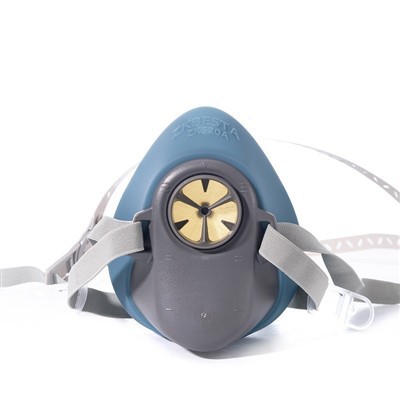
| Compatibility | Reusable Respirators | ZKBESTA 6000, 9000, FF-8000 Series |
Core Selection Criteria for HSE Managers
1. Understanding the K1 Classification
Not all gas filters are interchangeable. The K1 classification is specific to ammonia and methylamine. Using a general-purpose organic vapor (A1/B1) or acid gas (E1) filter will not provide adequate protection. The filter media consists of high-capacity activated carbon impregnated with specific reagents to neutralize NH₃.
2. Calculating Service Life & Breakthrough Time
The service life of an ammonia cartridge is finite and depends on the concentration of contaminants in the air. While laboratory breakthrough times exceed 60 minutes under standard test conditions (EN14387), real-world performance varies.
- High Concentration: In environments near the Permissible Exposure Limit (PEL), cartridges may last 1-2 shifts.
- Low Concentration: In well-ventilated areas with sporadic exposure, cartridges may last several weeks.
- Replacement Protocol: Replace immediately if you smell ammonia (odor breakthrough) or experience difficulty breathing (increased resistance).
3. Fit Testing & Assigned Protection Factor (APF)
The cartridge is only one component of the respiratory protection system. The face seal determines the actual protection factor.
- Half Facepiece: Maximum APF of 10. Requires a quantitative fit test.
- Full Facepiece: Maximum APF of 50. Requires a quantitative fit test to claim APF > 10 in negative pressure mode.
Never use negative pressure respirators in Immediately Dangerous to Life or Health (IDLH) environments.
Supply Chain & Customization Options
As a direct factory source, ZKBESTA offers procurement flexibility for distributors and large industrial accounts.
| Procurement Term | Standard Offering | Notes |
|---|---|---|
| Minimum Order Quantity (MOQ) | 500 Pairs | Bulk wholesale pricing applies |
| Lead Time | 15-25 Days | After deposit and art approval (if applicable) |
| Shipping Terms | FOB Xiamen, CIF, LCL | Global container consolidation available |
| Customization | OEM Supported | Logo printing, packaging, private labeling |
| Storage Protocol | Sealed Container | Store in cool, dry place away from direct sunlight |
Target Applications & Industries
The K1 ammonia cartridge is utilized across various sectors where ammonia is used as a refrigerant, cleaning agent, or chemical intermediate.
- Refrigeration: Charging/repair of industrial refrigeration systems using NH₃.
- Chemical Processing: Batch charging, dispensing, and maintenance in chemical plants.
- Agriculture: Handling of fertilizers and soil preparation agents.
- Facility Sanitation: Cleaning operations in food processing plants.
- Laboratories: Chemical transfer and parts cleaning.
Compatible industries include Mining, Oil & Gas, Transportation, Food Processing, Pharmaceutical, and Heavy Industrial Manufacturing.
FAQ
Q: What is the difference between a K1 cartridge and a standard organic vapor cartridge?
A: A K1 cartridge is specifically designed for ammonia and methylamine, utilizing impregnated activated carbon. Standard organic vapor cartridges (A1/B1) are designed for hydrocarbons and will not effectively adsorb ammonia gas. Never substitute a K1 filter with an organic vapor filter.
Q: What is the minimum order quantity (MOQ) for wholesale ammonia cartridges?
A: The standard MOQ is 1,000 pairs (2,000 individual cartridges) for wholesale orders. We offer OEM services including custom packaging and private labeling for bulk procurement. Contact us for a bulk quote.
Q: How should I store unused ammonia filter cartridges?
A: Store cartridges unopened in their original packaging. Keep them in a cool, dry place away from direct sunlight, humidity, and extreme temperatures. When stored properly, cartridges maintain efficacy for up to 5 years from the manufacture date. Once opened, store in an airtight container to prevent moisture absorption.
Looking for a reliable source for GB-certified ammonia filters? Request technical specifications and OEM pricing from ZKBESTA today.