Why Category III Classification Dictates Your Sourcing Strategy
Under EU legislation, PPE is divided into three categories based on risk. Category I covers minimal risks (e.g., gardening gloves), while Category III covers lethal risks. Filtering facepieces (FFP1, FFP2, FFP3) falling under EN149:2001+A1:2009 are Category III because they protect against solid/liquid aerosols and ionizing radiation.
For a buyer, this classification triggers specific legal obligations for the supplier:
Notified Body Involvement: A self-declaration of conformity is illegal. A Notified Body (e.g., SGS, TUV, Applus+) must intervene.
Production Surveillance: The factory cannot simply "make and ship." They must undergo annual audits or product testing to maintain the certificate.
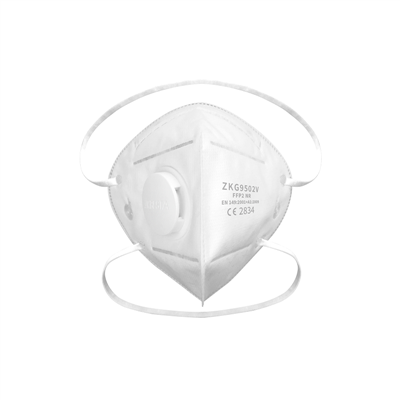
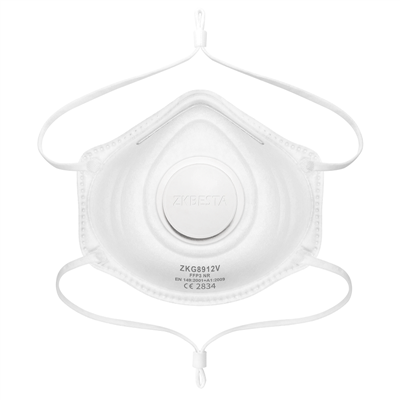
Traceability: Every box must carry the Notified Body number (e.g., CE 2834) and allow traceability back to the batch test records.
When evaluating a China manufacturer, ensure they understand that Category III implies ongoing surveillance, not just a one-time test report.
1.Decoding the Certification: Module B + C2 vs. Module B + D
A common pitfall in B2B sourcing is accepting a "CE Certificate" without checking the Module. For Category III PPE like FFP masks, there are two valid conformity assessment routes. You must verify which one your supplier holds.
Module B (Type Examination) + Module C2 (Product Verification)
Mechanism: The Notified Body certifies the product type (Module B). For production, the manufacturer selects random samples at intervals to test. The Notified Body performs surprise checks on the product at least once a year.
Buyer Implication: This is common for factories with high product variability. It requires the factory to have a robust internal testing lab to perform the interim checks.
Module B (Type Examination) + Module D (Quality Assurance)
Mechanism: The Notified Body certifies the product type (Module B) and audits the factory's ISO 9001 quality system specifically for PPE production (Module D).
Buyer Implication: This focuses on process control. It is often preferred for high-volume manufacturing as it ensures the production line consistency is monitored.
Verification Step: Ask the supplier: "Is your EN149 certificate issued under Module C2 or Module D?" Then, cross-reference the certificate number on the EU NANDO database to confirm the Notified Body's scope includes EN149:2001+A1:2009.
2.Auditing the Technical File: A Buyer's Checklist
Before issuing a Purchase Order (PO) for wholesale FFP masks, request the following technical data. A professional OEM supplier will provide these immediately.
1. The EU Type-Examination Certificate (Module B)
Check the "Scope" section. Does it cover the specific model you are buying?
- Standard: Must cite EN149:2001+A1:2009.
- Classification: Verify if it is FFP1, FFP2, or FFP3.
- Oil Resistance: EN149 classifies filters as NR (Not Reusable - 1 shift) or R (Reusable). Most disposable masks are NR.
- Validity: Ensure the certificate has not expired.
2. Test Reports (The "Data" behind the Certificate)
A certificate is a summary; the test report is the evidence. Look for these specific parameters in the report:
|
Parameter |
Standard Requirement (FFP3) |
What to look for in ZKBESTA Reports |
|
Filter Penetration (NaCl) |
≤ 1% (≥99% Efficiency) |
Look for results like 0.5% or 0.8% (Safety margin). |
|
Filter Penetration (Paraffin Oil) |
≤ 1% (≥99% Efficiency) |
Critical for R-class (Reusable) or oily aerosol environments. |
|
Total Inward Leakage (TIL) |
≤ 2% (Geometric Mean) |
Tests the face seal fit on human subjects. |
|
Breathing Resistance |
Inhalation ≤ 3.0 mbar |
Lower is better for worker comfort. |
|
Clogging (Dolomite Dust) |
≤ 2.0 mbar pressure rise |
Proves the filter doesn't clog quickly in dusty environments. |
3. Quality Control Protocols
For Category III, the manufacturer must demonstrate how they control quality during mass production.
- Raw Material Control: Do they test the melt-blown fabric batch-by-batch for filtration efficiency?
- Ultrasonic Welding: Are welding points tested for tensile strength?
- Final Inspection: Is there an AQL (Acceptable Quality Level) standard defined (e.g., AQL 2.5)?
3.Technical Specifications: FFP2 vs. FFP3
When defining your procurement specs, the choice between FFP2 and FFP3 depends on the hazard concentration.
FFP2 (Minimum 94% Filtration): Suitable for construction dust, sanding, and general healthcare (viral protection). It is the industrial standard for most applications.
FFP3 (Minimum 99% Filtration): Required for toxic dusts, asbestos removal, heavy metal fumes (welding), and active pharmaceutical ingredients.
Note on Breathing Resistance: Higher filtration often means higher breathing resistance. A high-quality CE mask manufacturer uses advanced electret-treated melt-blown media to maintain high efficiency while keeping pressure drop low (< 3.0 mbar), reducing worker fatigue.
4.Supply Chain & Commercial Terms
Sourcing from a specialized factory like ZKBESTA involves specific commercial parameters typical of the Xiamen manufacturing hub.
MOQ and Customization
Standard Models: Low MOQ (e.g., 1,000 - 5,000 pcs) for off-the-shelf items.
OEM (Custom Logo): Usually requires 5,000 - 10,000 pcs per model.
ODM (New Mold/Design): Requires significant volume (20,000+ pcs) and mold opening fees.
Lead Time
Sample Time: 5-7 days for existing molds.
Production: 15-25 days after deposit and artwork confirmation.
Shipping: FOB Xiamen is the standard term.
Packaging for Export
Ensure the packaging meets retail or distribution needs:
Inner: 1 pc/polybag (hygiene).
Master Carton: Standard export carton (5-ply).
Labeling: Must display CE mark, Notified Body Number, Standard (EN149:2001+A1:2009), and Manufacturer Address.
5.Conclusion: Validating Your Supplier
Do not rely on marketing claims. To secure a batch of CE EN149 masks, execute the following validation flow:
Request the Module B Certificate and verify the Notified Body number.
Ask for the latest Test Report and check the NaCl/Oil penetration values.
Confirm the Module C2 or D status to ensure ongoing factory surveillance.
Order a sample to verify the physical build quality (strap elasticity, nose foam adhesion).
By focusing on these technical and procedural details, you mitigate the risk of non-compliant goods entering your supply chain.
For technical datasheets or to verify a specific certificate number, [Request bulk pricing & OEM spec sheet] from our engineering team today.
FAQ
Q: How do I verify if a CE certificate for FFP3 masks is authentic?
A: Check the 4-digit Notified Body number on the certificate against the official EU NANDO database. Ensure the body is authorized for Regulation (EU) 2016/425 and standard EN149:2001+A1:2009. You can also request the Test Report (TR) number from the supplier and cross-reference it with the Notified Body.
Q: What is the difference between FFP2 NR and FFP2 R?
A: "NR" stands for Not Reusable (single shift use only). "R" stands for Reusable (can be used for more than one shift). R-class masks must pass additional clogging and mechanical strength tests. Most disposable FFP2 masks sold for construction are NR.
Q: What is your MOQ for OEM FFP3 respirators with a custom logo?
A: For silk-screen printing of a logo on standard FFP3 models, the typical MOQ is 5,000 pieces. For custom packaging or mold modifications, the MOQ may increase to 10,000 pieces. Lead time is generally 20-25 days after deposit.