Activated Carbon vs Nanofiber Filters: Technical Specification Guide
Bottom Line Up Front: Selecting between activated carbon and nanofiber filtration technology requires a clear understanding of the contaminant type and concentration. Activated carbon relies on adsorption for gaseous pollutants (e.g., acid gases, organic vapors), while nanofiber media utilizes mechanical sieving for high-efficiency particulate capture (e.g., PM2.5, viruses, welding fumes). For procurement, verify the specific standard compliance (GB 2626, EN 149) and intended use case to ensure adequate protection and service life.


Core Technology: How They Work
Understanding the physical mechanism behind each filter type is critical for specifying the correct personal protective equipment (PPE) for your workforce.
Ⅰ:High-Voltage Electrostatic Spinning Nanofiber (PVP)
This technology creates a membrane with an ultra-fine fiber diameter. The resulting structure has a large surface area and high porosity. Filtration occurs primarily through mechanical interception and diffusion of particles. This is ideal for applications requiring high airflow with low breathing resistance while maintaining a high capture rate for sub-micron particulates.
Relevant Standard: GB/T 32610-2016, GB/T 38880-2020
Ⅱ:High Dust Holding Capacity (HDC) Water Standing Electrode Melt Spray (WSEMS)
Utilizing a water electret process, this melt-blown media achieves a stable electrostatic charge. The crisscrossed, fluffy three-dimensional mesh structure traps particles via electrostatic attraction. This technology is particularly effective for extended wear times in high-dust environments due to its high dust capacity.
Ⅲ:Non-Adhesive Activated Carbon Fabric
ZKBESTA utilizes a proprietary process to manufacture activated carbon cloth without adhesive binders. This prevents pore blockage, ensuring maximum adsorption efficiency. The high carbon content and uniform structure are designed to mitigate nuisance levels of specific gases, such as benzene, formaldehyde, and sulfur dioxide, where ventilation is not sufficient.
Performance Data Comparison
The following table outlines the key performance indicators for ZKBESTA's proprietary filter media technologies. These values are derived from in-house testing using TSI 8130A automatic filter testers and scanning electron microscopy (SEM) analysis.
|
Parameter |
Test Method |
ZKBESTA Value (Nanofiber) |
ZKBESTA Value (Activated Carbon) |
|
Filtration Efficiency (Particulate) |
NaCl aerosol @ 95L/min |
≥ 99.4% (P3 Level) |
≥ 95% (N95 Level) |
|
Adsorption Capacity (Gas) |
Butane/Carbon Tetrachloride Activity |
N/A |
High (No glue blocking pores) |
|
Initial Airflow Resistance |
EN 149:2001+A1:2009 |
≤ 30 Pa |
≤ 35 Pa |
|
Dust Holding Capacity |
Gravimetric analysis |
High (Extended service life) |
Standard |
|
Primary Contaminant Target |
N/A |
Solid/Liquid aerosols, PM2.5 |
Organic vapors, Acid gases, Odors |
Application Suitability Matrix
Choosing the wrong media type can result in non-compliance or reduced worker productivity. Use the matrix below to match the technology to your operational environment.
1.Use Nanofiber / Melt-Blown Media For:
Construction & Demolition: Silica dust, concrete dust.
Metal Fabrication: Welding fumes and grinding particulates.
Healthcare & Public Safety: Viral transmission mitigation (influenza, tuberculosis).
General Manufacturing: Woodworking dust, textile lint.
2.Use Activated Carbon Media For:
Chemical Processing: Mitigation of low-level organic vapors and acid gases.
Painting & Coating: Spray painting overspray and solvent odors.
Waste Management: Hydrogen sulfide and other odor-causing gases.
Electronics Manufacturing: Cleanroom environments requiring VOC removal.
Engineering & Design Features
Beyond the filter media, the overall respirator design impacts the Total Inward Leakage (TIL) and user compliance. ZKBESTA incorporates specific engineering solutions to enhance fit and comfort.

Patented Exhalation Valve (ZL201620897668.5)
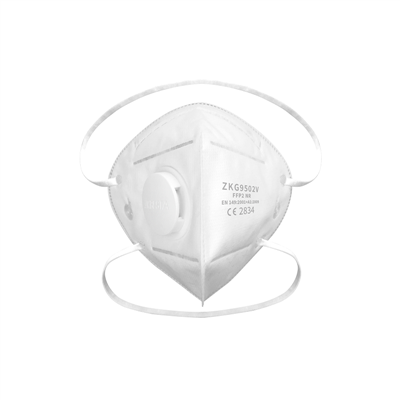
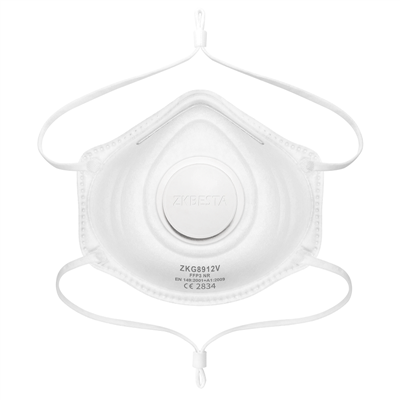
The smart breathing system features a curved structure for a secure fit and an ultra-thin valve plate.
This design reduces moisture buildup and heat stress, which is critical for workers in high-humidity environments or during strenuous activity.
The valve mechanism is tested for temperature resistance to ensure reliable function in extreme conditions.
Comfort & Fit System
Slow Rebound Memory Sponge: Positioned at the nose clip interface to relieve pressure points and improve the seal.
Adjustable Straps: Ultrasonic welded headbands with multi-point adjustment for secure fit under hard hats.
Faceseal Integrity: Designed to minimize leakage paths, verified through fit testing protocols.

Compliance & Certification
As a manufacturer, ZKBESTA adheres to strict quality control standards. Our facility operates under ISO 9001 principles and has participated in the drafting of national standards including GB/T 32610-2016 and GB 2626-2019.
Available Certifications:
CE Certification: Notified Body assessment per EN 149:2001+A1:2009 (Category III).
GB 2626: China mandatory standard for respiratory protection.
T/CTCA 2019: Industry standard for PM2.5 protective masks.
For distributors and safety managers, we provide full technical files and test reports to support your local regulatory compliance requirements.

CE

CE

ISO

ISO
Procurement & Supply Chain
We operate a fully automated production line capable of manufacturing 100,000+ units per day, ensuring short lead times for bulk orders.
|
Procurement Term |
Standard Policy |
Notes |
|
Minimum Order Quantity (MOQ) |
1000 pcs |
Lower MOQ available for stock items |
|
Lead Time |
1-3 days |
After deposit and artwork approval |
|
Customization |
OEM/ODM Supported |
Logo printing, packaging, and product specs |
|
Payment Terms |
T/T (Telegraphic Transfer) |
30% deposit, balance before shipment |
|
Port of Loading |
FOB Xiamen, China |
Full logistics support provided |
FAQ
1.Q: What is the difference between electrostatic melt-blown and nanofiber filtration media?
A: Electrostatic melt-blown (WSEMS) relies on a charged mesh to attract particles, offering high dust capacity for long wear times. Nanofiber media uses mechanical sieving with ultra-fine fibers, providing higher initial efficiency (P3 level) and lower breathing resistance. Nanofiber is optimal for high-risk viral or fine dust environments.
2.Q: Can I get a custom logo printed on the respirators?
A: Yes, we offer OEM services for custom logos and packaging. The standard MOQ for silk-screen logo printing is 1000 pieces per model. For custom mold modifications (e.g., unique valve design), the MOQ is 5000 pieces. Samples are available for approval within 7 days.
3.Q: How do you verify the authenticity of your CE certificate?
A: Our CE certificates are issued by accredited Notified Bodies in the EU. You can verify the certificate number directly in the NANDO (New Approach Notified and Designated Organisations) database. We provide digital copies of the full test reports for EN 149 filtration efficiency and breathing resistance upon request.
Next Step: View our full range of disposable mask models or contact our sales engineer for a technical datasheet.