For procurement managers and HSE directors, the choice between single-filter and dual-cartridge respirators is not merely a design preference; it is a calculation of Total Inward Leakage (TIL), breathing resistance, and worker fatigue.
While both configurations aim to meet standards like EN 140:1998/AC:1999, their performance envelopes differ significantly based on the contaminant concentration and the physical demands of the job. This technical analysis dissects the engineering differences to assist in selecting the correct specification for your inventory or project requirements.
1. Breathing Resistance and Airflow Dynamics
The primary engineering distinction lies in the surface area of the filtration media and the resulting pressure drop across the filter.
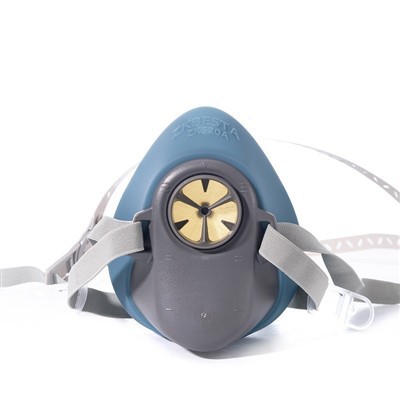
- Single Filter Systems: These designs typically utilize a central port (often compatible with P2/P3 particulate filters or A1 gas cartridges). While compact, the airflow is concentrated through a single media point.
- Physics: Higher air velocity through the filter media results in higher breathing resistance, especially as the filter loads with dust.
- Data Point: In heavy industrial environments, single-filter masks may exhibit exhalation valve resistance approaching the upper limits of comfort (>30Pa) faster than dual systems.
- Dual Cartridge Systems: By distributing airflow across two filters (left and right), the effective surface area is doubled.
- Physics: This reduces the air velocity through each filter, significantly lowering breathing resistance (pressure drop).
- Advantage: For high-workload activities (e.g., grinding, heavy chemical handling), the dual cartridge respirator reduces the metabolic cost of breathing, delaying fatigue.
2. Weight Distribution and Center of Gravity
Ergonomics play a critical role in compliance. If a mask is uncomfortable, workers will not wear it.
Single Filter (Front-Heavy): The weight of the filter sits directly in front of the mouth. This creates a lever effect that can pull the mask away from the face seal, particularly during rapid head movements. It requires tighter strap tension to maintain the seal, which increases facial pressure points.
Dual Cartridge (Balanced): The weight is distributed laterally.
Engineering Benefit: The center of gravity is lower and more balanced relative to the head's pivot point. This stability improves the fit factor during dynamic movement, ensuring the seal remains intact without excessive strap tension.
3. Field of View and Application Suitability
The physical footprint of the respirator dictates its suitability for confined spaces and specific trades.
|
Feature |
Single Filter Respirator |
Dual Cartridge Respirator |
|
Profile |
Low profile, compact |
Wider lateral profile |
|
Field of View |
Unobstructed downward vision (critical for precision tasks) |
Slightly restricted peripheral vision |
|
Best Application |
Construction, Masonry, General Dust |
Chemical Spraying, Heavy Industry, Mining |
|
Filtration Capacity |
Moderate (saturates faster) |
High (longer service life per cartridge) |
|
Typical Standard |
EN 140 (Half Mask) |
EN 140 (Half Mask) |
The "Chin Clearance" Factor:
For welders or workers in confined spaces who need to tilt their heads back or look down frequently, a bulky dual-cartridge setup can interfere with the chin or chest. In these scenarios, a streamlined single filter mask design is often the superior engineering choice.
4. ZKBESTA Technical Analysis: The 8500 Series Case Study

ZKBESTA's manufacturing data highlights the trade-offs in our production lines.
The Dual-Cartridge Advantage (Model 8500): Our dual-cartridge half masks are designed for environments with mixed hazards (e.g., particulate + organic vapor). The dual-bayonet mount allows for "piggyback" configurations (a P3 particulate pre-filter screwed onto an A1 gas cartridge). This modularity is impossible with most single-filter designs.
Filtration Efficiency: Whether single or dual, ZKBESTA ensures all filters meet EN 143 (Particles) and EN 14387 (Gas/Vapor) standards. However, the dual setup provides a safety margin; if one filter is slightly compromised or heavily loaded, the second filter maintains airflow, preventing the "suffocation" sensation that leads to non-compliance.
5. Procurement Strategy: What to Stock
When building a PPE catalog or fulfilling a bulk order, the decision should be driven by the end-user's industry:
For Construction & General Maintenance:
Recommendation: Stock Single Filter / Lightweight Half Masks.
Reasoning: Lower cost per unit, lighter weight, and better visibility for manual tasks. Adequate for cement dust, silica, and wood dust.
For Chemical, Petrochemical & Spray Painting:
Recommendation: Stock Dual Cartridge Respirators.
Reasoning: Higher adsorption capacity is required for organic vapors. The balanced weight is essential for workers wearing the mask for full 8-hour shifts.
For OEM/Private Label Partners:
MOQ & Customization: ZKBESTA offers injection molding customization for both types. The MOQ for customized dual-cartridge masks is typically 500-1000 units depending on the bayonet style (standard vs. proprietary).
Summary: Technical Comparison
|
Parameter |
Single Cartridge |
Dual Cartridge |
|
Breathing Resistance |
Higher (concentrated flow) |
Lower (distributed flow) |
|
Weight Balance |
Front-heavy |
Balanced / Stable |
|
Filter Life |
Shorter (smaller media volume) |
Longer (larger media volume) |
|
Cost |
Lower |
Higher |
|
Ideal Use Case |
Particulates (Dust/Fumes) |
Vapors/Gases & Heavy Dust |
Conclusion
There is no "universal" respirator. The single filter design wins on weight and visibility, making it ideal for general construction. The dual cartridge design wins on breathing resistance and chemical capacity, making it mandatory for industrial hygiene and chemical handling.
For distributors looking to optimize their shelf space, a mix of both is recommended to cover the full spectrum of EN 140 applications.
FAQ
Q: Can I use a P3 particulate filter on a single-filter mask for asbestos removal?
A: Yes, provided the mask body is EN 140 certified and the filter is EN 143:2000+A1:2006 P3 R/SL rated. However, ensure the specific mask model has been fit-tested for your workforce, as single-filter masks can be front-heavy.
Q: What is the shelf life of unused organic vapor cartridges for dual-cartridge respirators?
A: Typically 5 years from the date of manufacture if stored in the original sealed packaging at room temperature (15°C - 25°C) and low humidity. Once opened, the shelf life depends on the contaminant concentration and humidity levels in the workspace.
Q: Do you offer OEM services for the mask shell color and logo?
A: Yes. ZKBESTA provides full OEM services. We can customize the silicone/TPR mask shell color, head harness color, and apply silk-screen logos. Standard MOQ for color customization is usually 1,000 units.

Ready to source compliant respiratory protection?
Verify our CE certified REUSABLE respirator specifications or contact our engineering team for a bulk quote on single and dual-cartridge systems.