Why Do Your Workers Keep Secretly Removing Their KN95 Masks?
In the market cheap respirators often use dense, low-quality melt-blown fabric, sacrificing breathability to pass certification tests. When workers wear them, it's like running a marathon through a drinking straw-the diaphragm and intercostal muscles must work overtime just to exchange gases. Studies show that when inhalation resistance exceeds 200Pa, the body's Work of Breathing (WOB) increases by over 40%. This means workers' lungs are already in "overtime mode" before they even lift a single load.
Q: What exactly is "breathing resistance"?
A: Breathing resistance is the "friction" air faces passing through a mask. The higher the resistance, the harder your lungs must work. Here's the math: A worker breathes roughly 20,000 times per day. If each breath requires extra effort, it's like forcing their lungs to run an extra 10 kilometers daily-without extra pay. That's why we call it the "Hidden Labor Tax": you don't pay more wages, but your workers' bodies are clocking overtime.
Q: Isn't filtration efficiency (PFE) what matters? Isn't 99% filtration the best?
A: High filtration ≠ Effective protection. It's like buying a car based only on horsepower while ignoring fuel consumption-even a Ferrari is useless without gas. The brutal reality: If mask resistance is too high, workers will pull it down to breathe. At that moment, 99% filtration efficiency equals 0% protection. Cheap masks often use dense, low-quality melt-blown fabric to pass lab tests. They block dust, but they also block oxygen. The real formula: Low resistance + High filtration = Real protection; High resistance + High filtration = Workers secretly removing it = Zero protection.
Q: My workers complain it feels "stuffy." How serious is this, really?
A: This isn't whining-it's a physiological alarm. When inhalation resistance exceeds 200Pa (Pascals, a pressure measurement unit): Immediate reaction: Like wearing a mask while running stairs-dizziness, loss of focus Work impact: Slower reaction times, increased error rates operating machinery (especially dangerous for work at height) Physical damage: Long-term exposure causes headaches, elevated blood pressure, even cardiopulmonary strain The worst part: To catch their breath, workers pull masks down, letting dust rush directly into their lungs. Your protective equipment becomes a health hazard.
Q: Don't regulations say KN95 masks are compliant if resistance is ≤350Pa?
A: 350Pa is the passing grade, not the comfort grade. Just like 60% is a passing exam score, but would you be satisfied if your child only scored 60%? The grading system: ≤350Pa: Legal minimum standard; clearly stuffy after wearing (suitable only for minutes, not hours) ≤200Pa: Industrial comfort standard; wearable for 4-6 hours continuously without fatigue ≤150Pa: Premium low-resistance; feels like wearing nothing all day The cost trap: Saving money on cheap 350Pa masks may cost you more in a single workplace injury settlement or employee turnover than upgrading to low-resistance options.
Q: How can I quickly tell if a mask has high resistance without special equipment?
A: Three quick tests: The Candle Test: Wear the mask properly and try to blow out a candle from 15cm away. If you can't blow it out, or it's very difficult, the exhalation resistance is too high. The Deep Breath Test: Take 10 rapid deep breaths. If you feel dizzy or the mask collapses against your nose, inhalation resistance is too high. The 4-Hour Observation: Have workers wear it normally for 4 hours. Count mask-removal incidents. More than 3 times per hour indicates excessive resistance. Professional tip: Conduct regular Breathing Resistance Audits-use professional differential pressure sensors to measure actual resistance during real work, not just laboratory data.
Q: What specific details should I look for when selecting low-resistance masks?
A: Remember these 4 key points:
1. Check the Filter Structure (Most Critical) Gradient density media: Coarse outer layer (stops large particles), fine middle layer (electrostatic adsorption), breathable inner layer . Avoid single-layer thick filters: Making fabric thicker to improve filtration always increases resistance
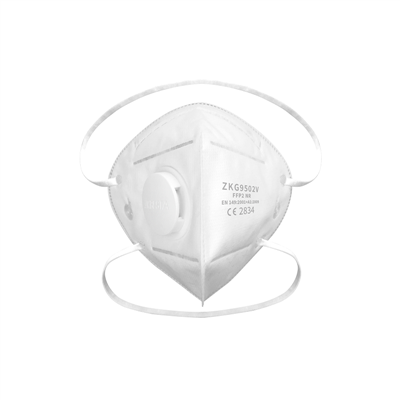
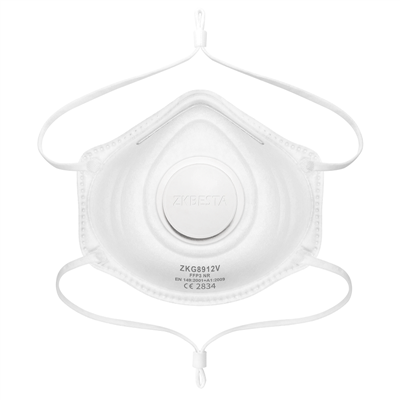
2. Check for an Exhalation Valve Heavy physical labor absolutely requires a valve. It expels hot air and CO₂ quickly, reducing resistance by 30%. Note: Valves are prohibited in medical/anti-epidemic settings, but are essential for industrial dust protection.
3. Check the Electrostatic Technology Quality melt-blown fabric captures dust using "static electricity," not just "density"-this provides high filtration with high breathability. Ask suppliers: "What is the electret voltage of this mask?" (Above 30kV is ideal.)
4. Check Facial Fit If the mask leaks, workers will tighten the straps, increasing pressure resistance. Choose masks with size options (S/M/L) or adjustable nose bridges.
As a professional manufacturer specializing in respiratory protection, ZKBESTA understands this fundamental truth: Effective protection isn't about how expensive the mask is-it's about whether your workers will actually keep it on. We are now offering a limited-time, complimentary on-site assessment service-no supplier change required; see the root cause first.
What You'll Receive:
Precision Diagnosis: Certified engineers visit your facility with differential pressure sensors to measure actual breathing resistance under real working conditions (not theoretical lab data)
Data-Driven Report: A comprehensive Respiratory Resistance Optimization Proposal identifying current equipment risk levels and improvement pathways
Resistance-Reduction Solutions: Customized recommendations for low-resistance filter media upgrades or structural modifications that reduce breathing burden by 30-50% while maintaining protection ratings
Restore your workers' breathing from "weight training" back to "natural instinct." Protect pulmonary health starting with one professional breathability assessment.